Tuition at Trinity has increased by $8,500 over the past four years. The total undergraduate cost of attendance is $74,298 this year, a stark contrast from $65,798 in 2022. This increase is a direct result of several factors, which can be attributed to inflation and new campus initiatives.
Eric Maloof, vice president for enrollment management, said that the final decision to raise tuition is ultimately up to the Board of Trustees. However, Student Affairs, Finance and Administration, Enrollment Management and Academic Affairs work together to make a recommendation to the board. Each of these departments research to analyze factors such as other universities’ prices, insurance, retention rates, utilities, technology, healthcare and inflation. According to Maloof, in the aftermath of COVID-19, Trinity tried to be cautious of tuition increases.
“But, more recently, reality is that inflation has been here for some time. We are seeing that in the cost of doing business as an institution,” Maloof said.
Maloof said that inflation has pushed higher prices on basic business needs across the board. According to an inflation calculator that utilizes data from the U.S. Labor Department’s Bureau of Labor Statistics, inflation has risen by 10.70% since 2022. If tuition pricing were solely based on inflationary factors, students would be paying $72,839 in 2025. However, the current total cost of attendance is $74,298.
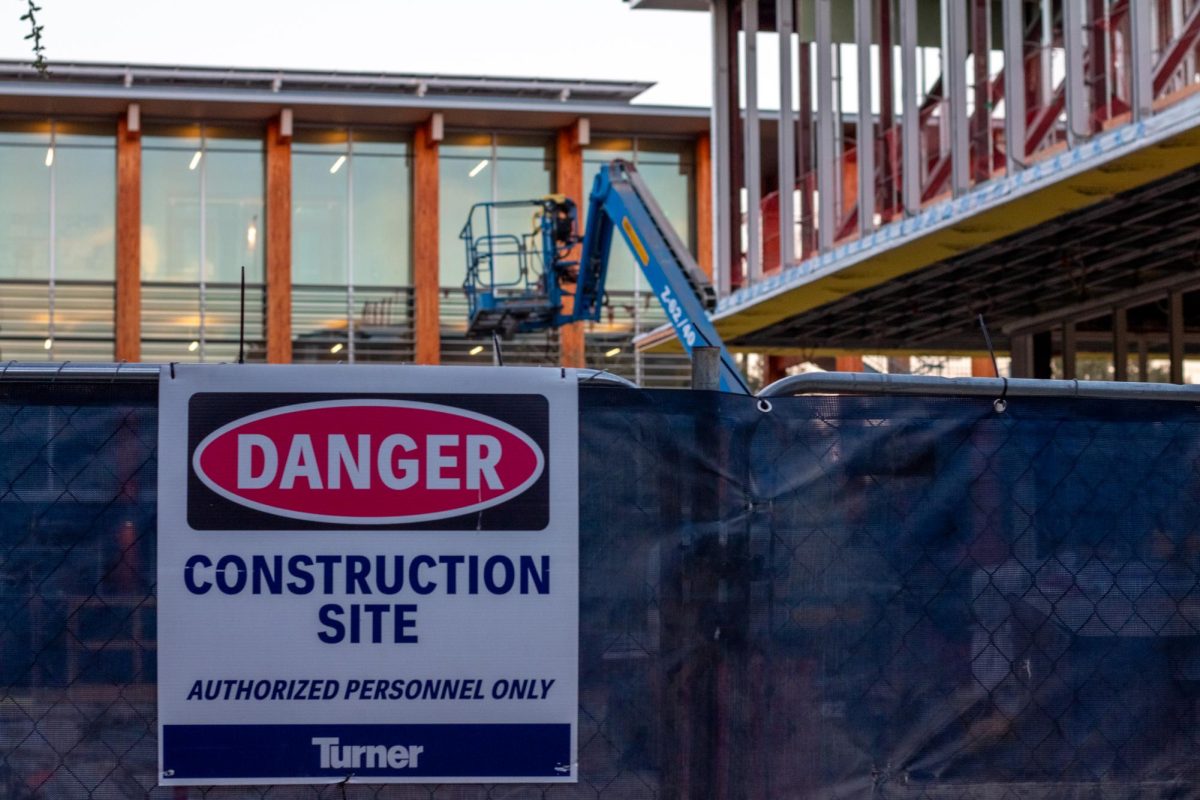
Maloof said that the allocation of these extra funds has been directed to a variety of projects and initiatives. This money has funded the new Welcome Center, upgrades to the athletic facilities and the new pickleball courts. Apart from this, money is also being allocated to the salaries of professors and staff members, who are also being affected by inflation in their day-to-day lives.
However, inflationary challenges are also affecting the students and families who are bearing the brunt of this increase. According to Andrew Wells, vice president of student affairs, Trinity tries to be mindful of student and family budgets by making incremental increases to tuition every year.
“If they [families] budget around the assumption that tuition won’t change and then it changes dramatically like that without advanced warning, that’s really hard. So I, on principle, think it’s appropriate to have incremental increases every year so that there isn’t a shock,” Wells said.
Advanced warning is not always enough when preparing to pay for tuition, though. Need-based financial aid at Trinity is evaluated on a case-by-case basis for every student who applies. Maloof said that Trinity collaborates with the student, the federal and state governments to develop a customized financial package tailored to their specific needs. This can include the distribution of Federal Pell Grants or the Texas Equalization Grant, depending on a student’s need level. This financial package is reassessed annually, looking at loan indebtedness rates as well as family finances.
While merit-based scholarships are given out at Trinity, they rarely account for the entirety of tuition payment. Maloof said these scholarships typically remain stagnant, but can be increased.
“If tuition increases, or the cost of attendance increases, the scholarship stays the same, but obviously that means it would be a reduction in value as proportionate with the cost of attendance,” Maloof said.
Bryce Dye, senior biochemistry and molecular biology major, said many of his peers are upset to be paying a higher percentage of tuition. He said that while there is a small group of students who are not affected by this price change, there are a lot of people who are being affected in a very evident way.
“It becomes so expensive, and it’s not a cost that you sign up for when you agree to go to the university years before,” Dye said.
Dye pointed out that many students are confused about where their money is going. Trinity’s tuition is higher compared to similar liberal arts colleges, such as St. Mary’s University and Southwestern University. However, Wells said that the curriculum that Trinity offers outmatches that of these other universities.
“The rigor of our curriculum, the opportunities for undergraduate research and the opportunities for a rich co-curricular experience and life are more robust here,” Wells said.
Eric Maloof shared this sentiment, noting that Trinity aims to sustain its current learning environment while also making improvements for its students. According to Maloof, Trinity invests a lot of resources and time to minimize the effect this has on students. These increases to tuition allow Trinity to continue and upgrade its services for students.