Six days before I graduated high school, I played in a soccer game during a snowstorm. Late in the match, the opposing goalkeeper punted the ball deep into our half. As a central defender, I went up to clear it with my head. Normally, you use your forehead, the strongest part of the skull, but in the blinding snow, the frozen ball struck the top of my head instead. The impact was immediate. A throbbing headache spread to my eyes, causing temporary blackouts. My coach recognized something was wrong and subbed me out.
For a few days, I felt fine and pushed through the busy week leading to graduation. But right before the big day, the symptoms returned with greater force. By graduation morning, I was nauseous, my eyes drifted uncontrollably and I could barely stand. My parents drove me to the ER right after the ceremony. This wasn’t my first concussion. I had been diagnosed once before, and on other occasions, I avoided reporting symptoms to escape diagnosis.
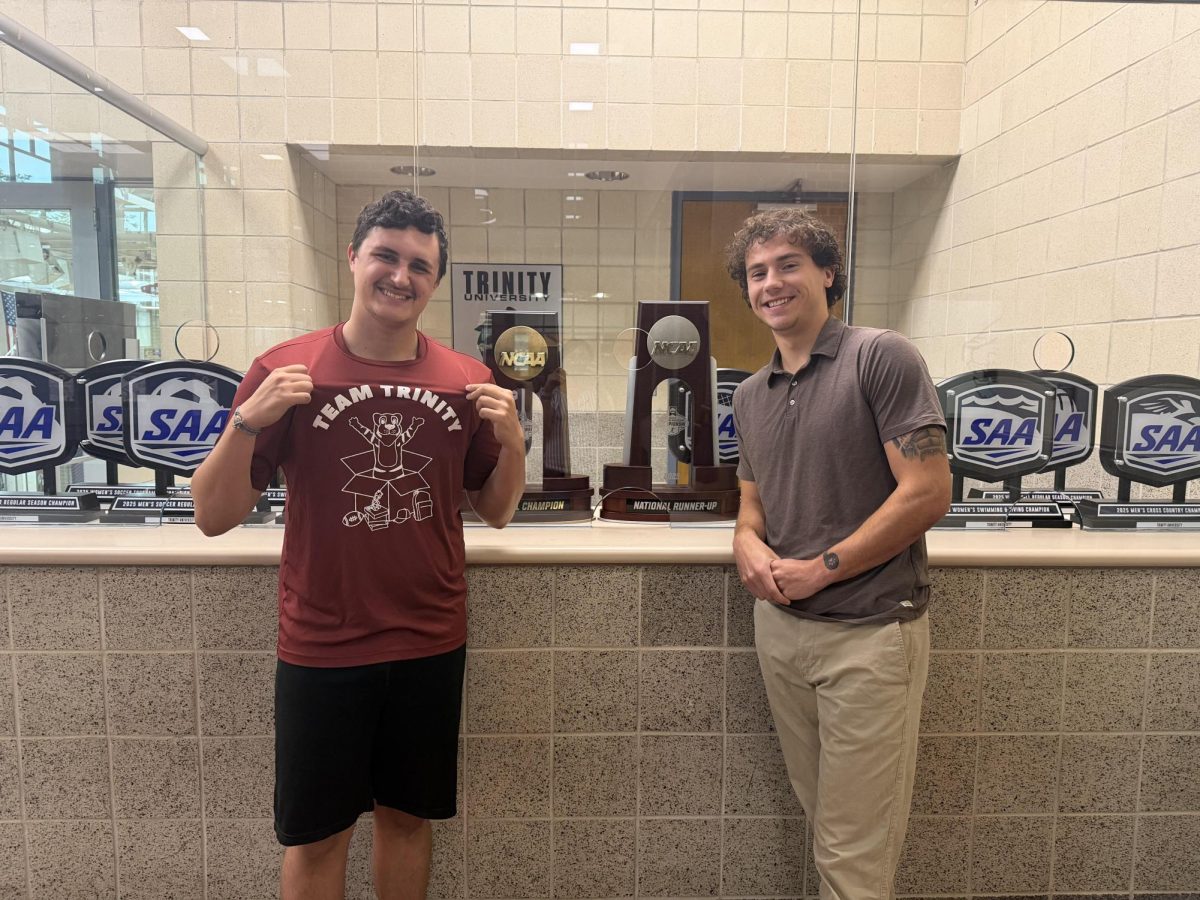
After resting, I returned for a summer tournament and joined the Trinity men’s soccer team that fall. But something was off. I felt slow, like my instincts had dulled. I blamed myself for not being good enough. The feeling didn’t go away. During a Thanksgiving touch football game, I noticed the same sluggishness and lack of awareness. Only then did I seek further medical help. Months of appointments eventually led to rehab, where a specialist told me I was likely suffering from post-concussion syndrome (PCS).
PCS is a form of traumatic brain injury (TBI) that develops after a concussion, leaving symptoms that can persist for weeks, months or even years. Migraines, dizziness, memory loss, brain fog, irritability and vision problems became part of my daily life for nearly a year.
For years, athletes, coaches and even parents have brushed off concussions. The culture of sports glorifies toughness, even in the face of injury. The typical concussion lasts a few days to a few weeks, with the average recovery time being 10 days. Yet the recovery process is slow, frustrating and isolating, making it tempting to return to normal too soon. While PCS is classified as a traumatic brain injury, concussions themselves add a keyword to that designation: mild traumatic brain injury.
Even when you’ve had a concussion, it can be hard to take it seriously. It often doesn’t really feel like a big deal; people may say you’re being dramatic. You might think, “Oh, it’s just a headache, I’ll be fine.” People will push through classes and even return to practices because there are no visible injuries — no one knows what’s going on in your brain except you.
That invisibility is exactly what makes them so dangerous. What feels like a headache can leave lasting damage to memory, balance and mental health. A 2023 Neurology Clinical Practice study found that there are an estimated 3.8 million concussions in the U.S. annually, adding that 50% of concussions go unreported. Playing contact sports puts you at risk of repetitive concussion, sometimes even before full recovery, and at greater risk of long-term consequences like PCS. Perhaps the scariest thing is how much is unknown about concussions. We don’t know how many concussions are “too many.” Most people are unaware of second-impact syndrome, likely what I experienced, characterized by a second, drastic swelling of the brain before fully recovering from the first concussion.
Studies have found that continued participation in activities associated with head trauma leads to decreased cognitive function over time and even comas. PCS is just one example of a TBI that can be caused by a minor concussion, with the list including chronic-traumatic encephalopathy (CTE) and even an increased chance of neurodegenerative disorders like Alzheimer’s. CTE is especially notable for its heavy association with contact sports. In a recent study, 40% of brain donors who had played contact sports were diagnosed with CTE, 75% of whom played American football.
As the Trinitonian focuses on health and wellness this month, I encourage everyone to take concussions seriously. Don’t try to play through them, don’t brush them off in class and don’t let teammates hide their symptoms. Concussions are not “just part of the game.” They are traumatic injuries with potentially life-altering consequences. Protect your brain. It’s the only one you have.