Vice President of Academic Affairs Megan Mustain announced in an email on Sept. 17 that sixty years of Trinity University Press (TU Press) will come to a close in December 2026. Several financial issues, involving the school’s strategic needs not being compatible with the cost of publishing books and maintaining the press, led to the university’s formal decision to begin a sixteen-month sunsetting process.
According to Tom Payton, TU Press director and publisher, the press was originally established in 1967 with the university’s acquisition of the Illinois-based Principia Press. The intention of the acquisition and establishment was to give the university prestige and national recognition.Since its official founding, TU Press has played a role in on-campus publishing for both authors at Trinity and from around the country or the world. In the early 2000s, after a decision made by the board of trustees and the school president to relaunch the press after a period of stagnation that began in 1990, the press published over 300 books, both by national and international authors. Authors included New York Times bestselling authors, National Book Award winners and figures such as zoologist Jane Goodall. For nearly 20 years, Payton has acted as the director of TU Press, overseeing the staff and its operations.
“I was surprised and saddened,” Payton wrote in an email. “Not only to see such a strong legacy end but also to see the university move away from the type of commitment to the liberal arts and humanities that having a university press ensures. It is a surprise turn in light of Trinity’s meteoric rise nationally in these ranks. But, the university leadership has every right to steer the university in the direction they think is best.”
In addition to the release of her email statement announcing the closure, Mustain added that costs escalated for book publishing over the last five to six years, straining the university budget. Mustain said that supply chain issues related to the COVID-19 pandemic, complicating factor, only worsened over time.
“The staff of the press are amazing, and they do good work. So that makes this a really, really hard decision,” Mustain said. “I love the press and the work they do. I hope we can find a way to have all our authors taken care of, and that’s the real focus for the folks at the press right now.”
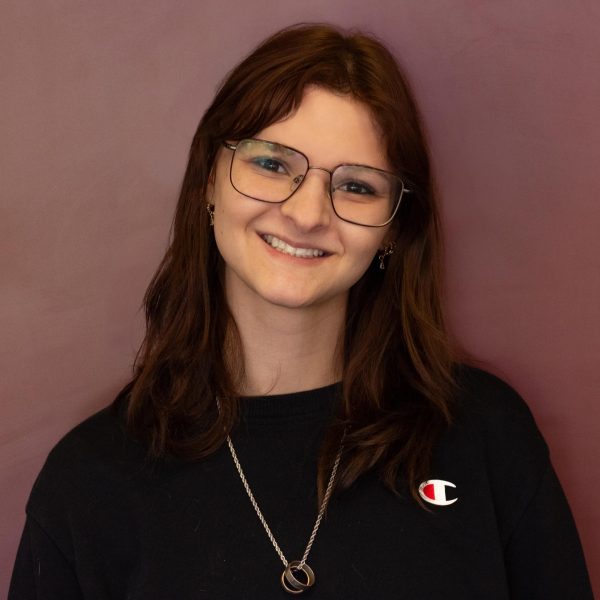
The news of the closure has hit the press’s student workers as well. The press has historically hired Trinity students.Among them is Avery Letendre, junior English major. Letendre started working with the press as a student intern this semester. She said she was upset with the news as opportunities with TU Press was one of the reasons she enrolled at Trinity in the first place.
“I personally am gonna try and continue talking to people about it because university presses are really important,” Letendre said. “I know the TU Press does a lot for San Antonio and Texas authors who might not be able to publish elsewhere. It’s saddening.”
There have been no further details concerning the press’ closure since Sept. 17. For the time being, TU Press interns and staff only have the information from the single email. Despite this, Payton still said the school has its rights to pull support if necessary for Trinity’s success, that its leadership has every right to steer it in the direction it feels best.
In the meantime, TU Press will still publish books and writing over the next 15 months. This includes a book co-authored by former Mayor Ron Nirenberg and David Lesch, Ewing Halsell distinguished professor of history. As the Trinity community slowly says its goodbyes, the remaining time for the press will continue operations as it has.
*This article was updated on Oct. 4 to remove an inaccurate sentence. In the previous version, the sentence stated that Letendre did not know how the Trinity Review will print next year. This is incorrect. The Trinity Review publishes independently and is separate from TU Press, Letendre wrote to the Trinitonian over email. Students, along with support from the Department of English, the Student Government Association and the creative writing program, write, edit and produce the Trinity Review. The Trinitonian apologizes for this mistake and is committed to ensuring that the coverage is factual and reliable.