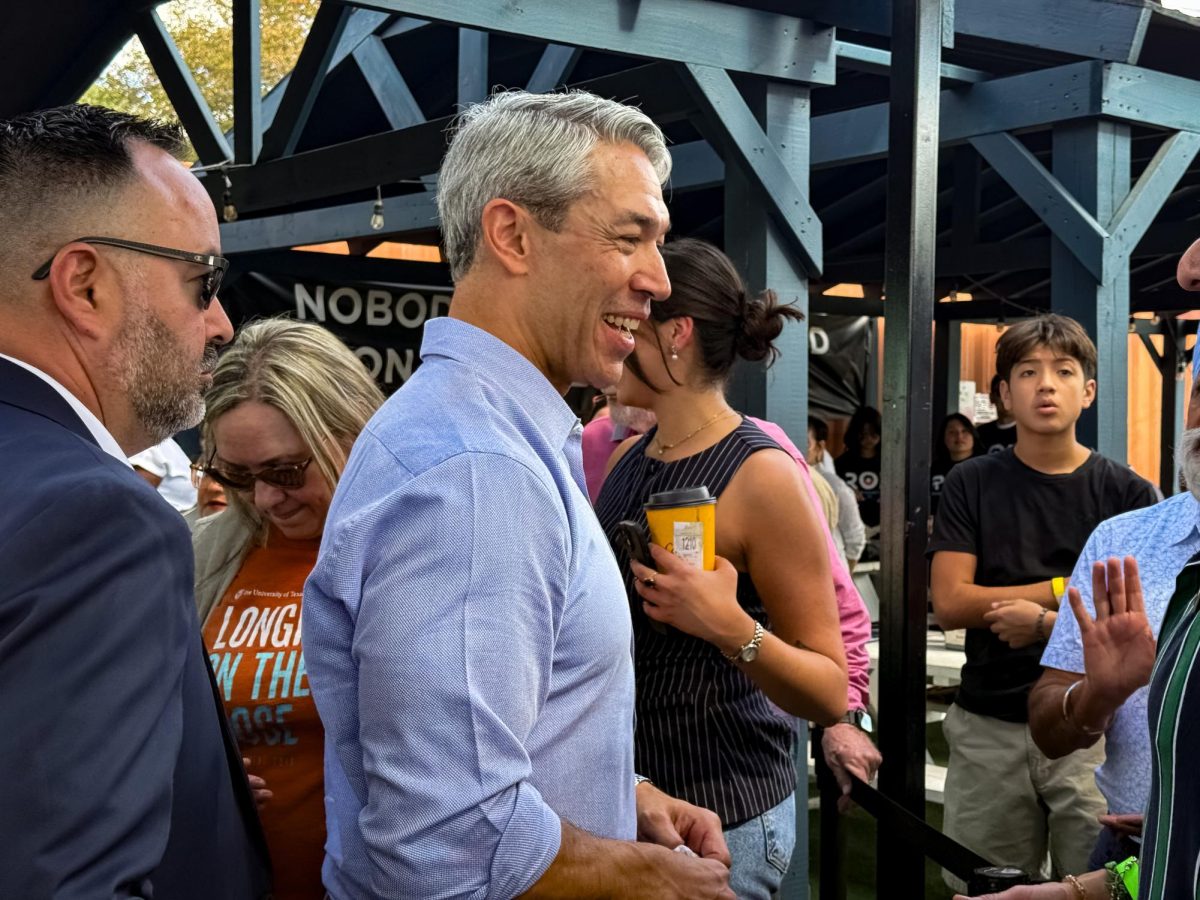
Ron Nirenberg officially announced his bid for Bexar County Judge on Nov. 15, challenging the incumbent Honorable Judge Peter Sakai. Nirenberg was the Mayor of San Antonio from 2017 to 2025 and acknowledged in his “Big Announcement” speech that, despite the accomplishments he made as mayor, there are still important issues facing the region that he feels he can fix as county judge.
Nirenberg said during his speech that these challenges include finding new ways to work with cities by cutting competing programs, solving problems in the elections department, supporting opportunities for local school districts and fully supporting the justice system. He said that even though he supported the initiative to make community college free for Bexar County high school graduates during his time as mayor, young people still can’t find good-paying jobs. Despite passing the city’s first affordable housing bond, too many families are still living in poverty.
“We can overcome any challenge when your government is working harder and smarter for you, and your government works as hard as you do,” Nirenberg said.
In an interview with the Trinitonian after his “Big Announcement” event, Nirenberg said that he is running for county judge because he wants to impact and benefit the community. He said that a significant change in the state and the country is only possible by solving issues at the local level. There is no better preparation for Bexar County Judge than being the mayor of San Antonio, according to Nirenberg.
“The truth of the matter is being successful in that office meant collaboration among all the suburban cities across our region. It’s the same kind of work in coalition building and teamwork that’s necessary in this new office. And so, I think I’m battle-tested and ready to go,” Nirenberg said during his speech.
Nirenberg’s opponent, incumbent Sakai, has been in office since 2023. Sakai wrote in an email statement to the Trinitonian that during his time as county judge, he has been committed to protecting children, combating domestic violence and helping families rebuild. He wrote that he has made major strides in affordable housing and has stood with working families in a struggling economy.
“We’re working with University Health, the San Antonio Food Bank, and our non-profit community to help families cut from Medicaid, facing rising premiums, and struggling to put food on the table due to the federal government’s failure to fulfill their commitment on SNAP benefits,” Sakai wrote.
Sakai wrote that he is the best candidate for county judge because he is deliberative. He listens to both sides of an argument and reviews facts and evidence before making decisions.
“I’ve held town halls across our community to be transparent about the County’s budget and listen to community priorities. Now more than ever, voters don’t care about the next step in someone’s political career, they’re demanding leaders who bring people to the table, who listen, and who are focused on getting results,” Sakai wrote.
Both Nirenberg and Sakai want to maximize the University Health System, and are concerned about poverty and affordable housing. According to the City of San Antonio’s 2024 Status of Poverty report, 17.7% of the population lives below the poverty line. San Antonio’s poverty rate has stayed stagnant for the last decade, and according to the report, this is most likely a “systemic issue rooted in generational poverty.”
When Nirenberg was mayor, he and County Judge Sakai, worked together to approved changes to the CPS Energy Residential Energy Assistance Program that expanded utility assistance to those living below the federal poverty line. They also both worked on two affordable housing projects approved on June 12, aimed at providing housing for “households earning at or below 50% of the Area Median Income,” according to the City of San Antonio.
Sakai hosted a food distribution event for families experiencing food insecurity due to Supplemental Nutrition Assistance Program (SNAP) benefit restrictions on Nov. 5. Sakai wrote that while Nirenberg has criticized the redundancies between the city and the county, he has done little to build a collaborative culture between both his council and the county. Aside from negotiating Project Marvel without public input, Sakai wrote, Nirenberg’s signature workforce development project never got off the ground.
“In a moment when Washington politics is denying SNAP benefits, letting ACA [Affordable Care Act] subsidies run out, and imposing job-killing and price raising tariffs, Ron chooses to look the other way and engage in a Democrat-on-Democrat fight,” Sakai wrote. “I think that’s why a lot of people have suggested he’s just looking for a job.”
Nirenberg said in his speech on Nov. 15 that the San Antonio health system needs to be maximized. In an interview with the Trinitonian, Nirenberg clarified, adding that this health system is funded by taxpayer dollars, and provides care to indigent populations. As county judge, Nirenberg said he could ensure that these systems address the healthcare gap while remaining sustainable business operations.
“The hospital and medical delivery space is very competitive, and I would want to make sure that we’re maximizing the resources — the public resources — going into the university health system to ensure that they’re being delivered in areas of healthcare inequity,” Nirenberg said.
Alynn Miranda, junior political science and international studies major, is also taking Nirenberg’s “How a Modern City Works” (GNED 3391) class. She said that Nirenberg gave her a different perspective on politicians, as they talked about topics such as redlining, poverty and historical disparities during class. She expressed that Nirenberg has a good chance of winning, noting a University of Texas at San Antonio Center for Public Opinion Research study that found 7% of voters didn’t know or weren’t sure who Nirenberg was, while 25% didn’t know who Sakai was.
“I think that really speaks a lot about the outcome, perhaps, but at the same time, I feel that he has very extensive experience working in the city,” Miranda said.
Voters can cast their ballots in the March 3 Democratic Primary, and the general election will take place in November.
*Bexar County Judge Peter Sakai was not available for a Q&A by the time of publication. The Trinitonian will publish any further comments at trinitonian.com.