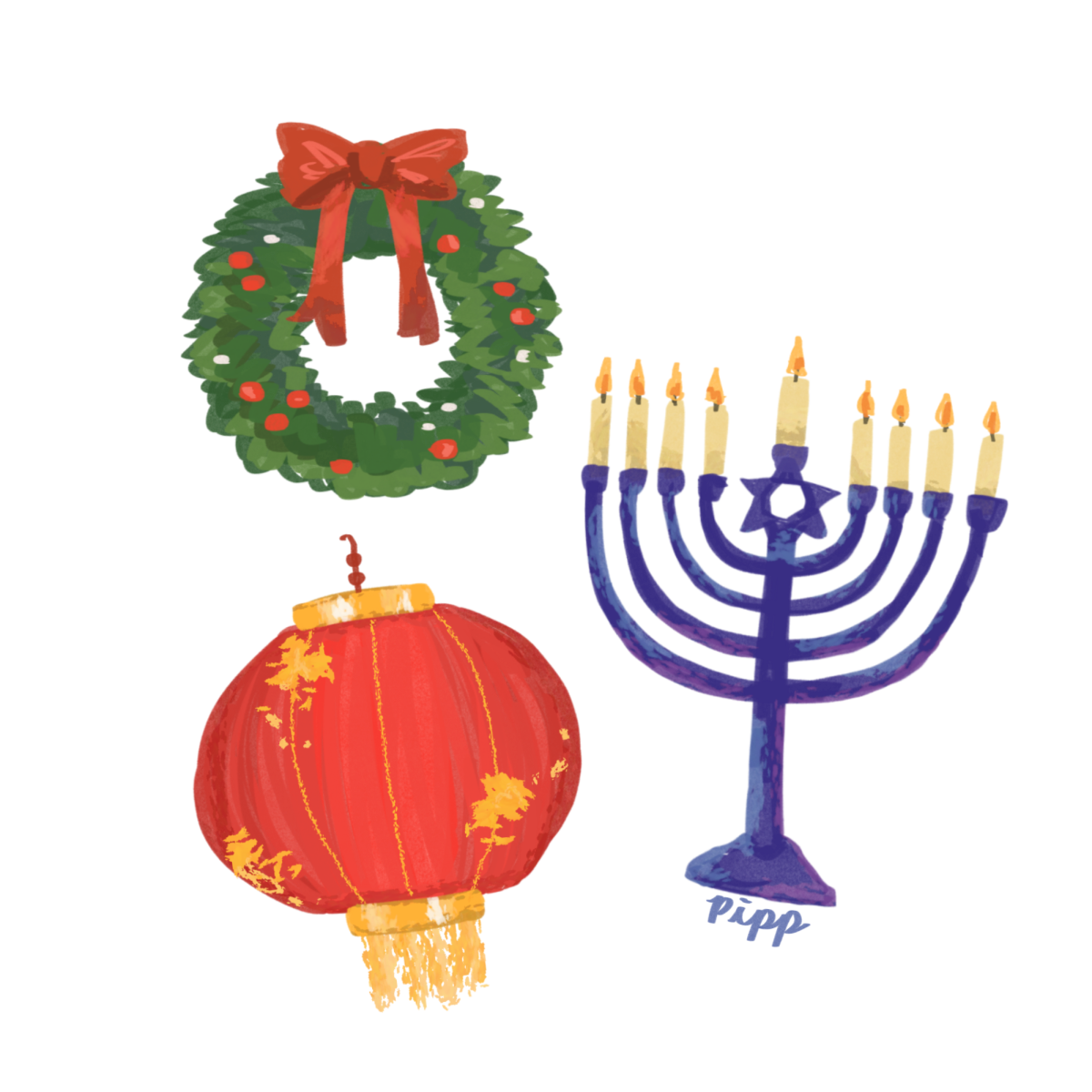
Fading daylight, cold temperatures, and landscapes reshaped anew signal the arrival of winter. During this season, people get into the spirit of holiday celebration by commemorating various winter festivities such as Christmas, Chinese New Year and Hanukkah. Within this seasonal transition emerges a series of diverse customs steeped in historical significance and camaraderie.
Christmas
Christmas Day takes place every Dec. 25, originating from Christianity, and celebrates the anniversary of the birth of Jesus Christ of Nazareth. Modern customs associated with this holiday include Santa Claus climbing down chimneys, putting up Christmas trees, images of elves at the North Pole and exchanging gifts.
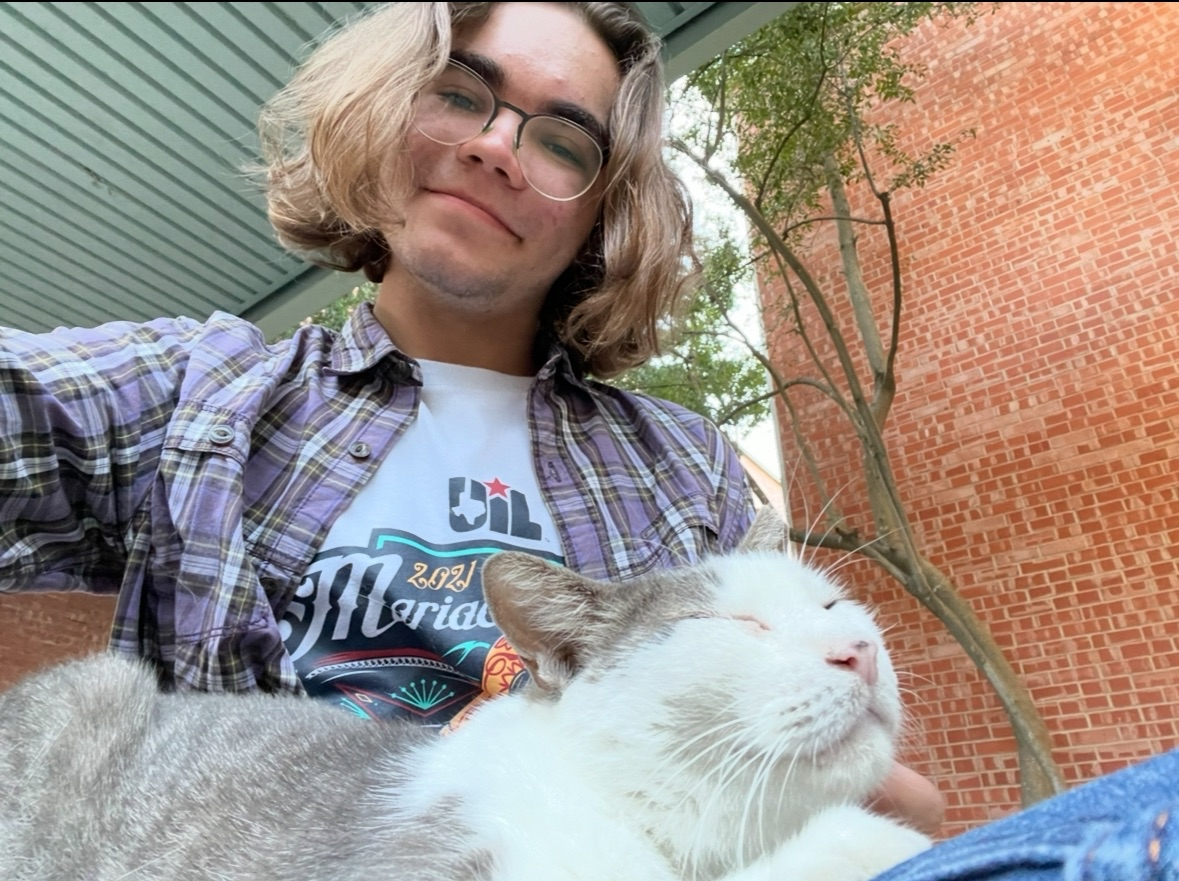
Abigail Stone, sophomore mathematics major, is a member of a bible study group led by a pastor at Trinity Baptist Church that gathers on campus. Stone stated that the significance of Christmas, from a biblical aspect, revolves around the rejoicement of Jesus and gratitude.
“I spend every single day with my family,” Stone said. “I wake up on Christmas morning, and my whole family is cooking breakfast together. We are all eating breakfast with no distractions, no phones, no work, no school talk. We sit in the living room, and we open presents.”
Stone stated that her favorite part about Christmas was community. During this time, her family attends church, looks at Christmas lights, decorates the home and a Christmas tree, and reunites with relatives.
Chinese New Year
Chinese New Year, or the Spring Festival, runs from Feb. 17 to March 3 next year. The 15-day festival marks the celebration of the start of the Lunar New Year. From the first new moon to the first full moon, the celebration ushers out motifs of luck and prosperity, honoring deceased relatives, dragons and animal mythology evocative of the zodiac.
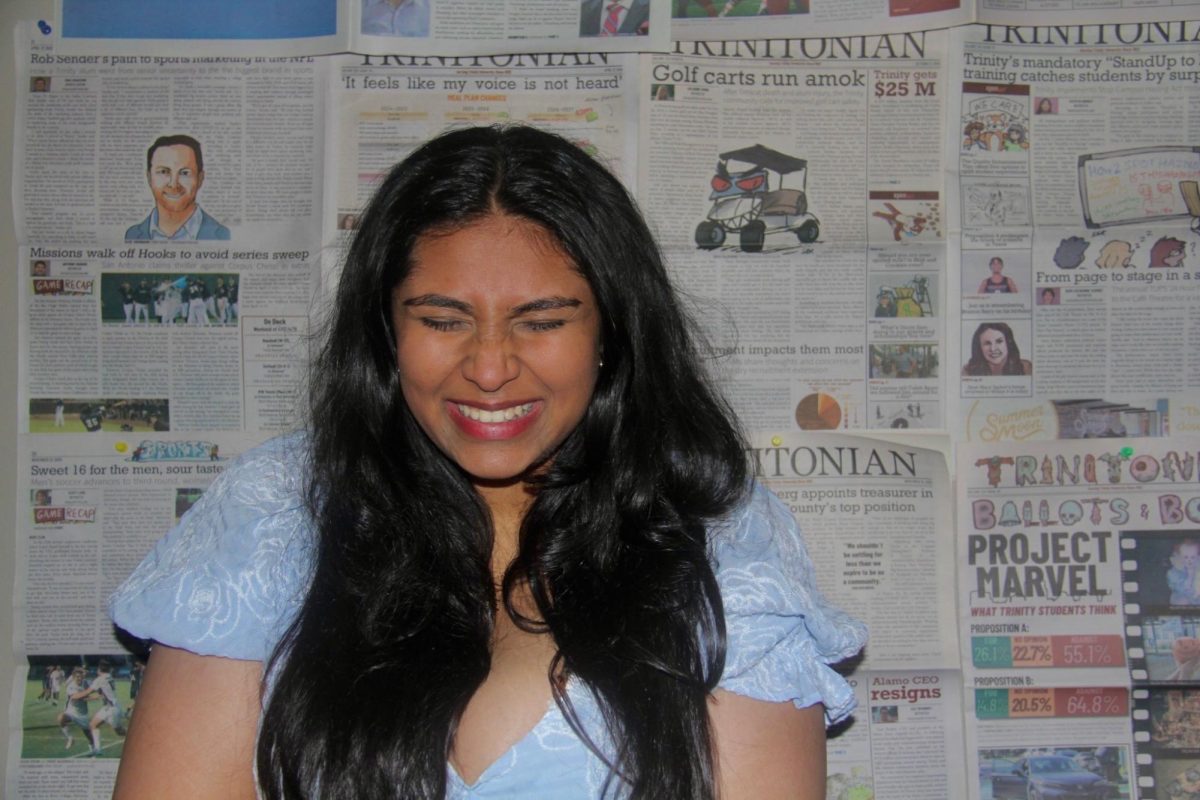
Yvonne Gu, sophomore international business and marketing double-major, is an executive board member of the Asian American and Pacific Islander Council and celebrates the holiday annually with her family. Gu said Chinese New Year serves as a fiesta that celebrates diversity aimed at gathering people for the value of community.
“In my household, when we celebrate Chinese New Year, it’s a big event,” Gu said. “It can be celebrated in different aspects. Some communities might gather together, and they’ll do full market festivals as part of the community celebration. Some people will just go for a small family dinner. And some people will just go out and enjoy the new year fireworks.”
Aside from the versatility in celebration amongst various groups, Gu connected the holiday back to her own personal identity. Gu said the significance behind the holiday is rooted in cultural heritage and kinship.
“It helps me connect with my ancestral roots and also makes sure that I celebrate it with a community that I feel like I belong,” Gu said.
Hanukkah
Hanukkah, or the Festival of Rededication, spans from Dec. 14–Dec. 22 this year. The eight-day celebration commemorates the rededication of the Second Temple in Jerusalem, during which Jewish Maccabees rose up against oppression under the Seleucid Empire in the Maccabean Revolt.
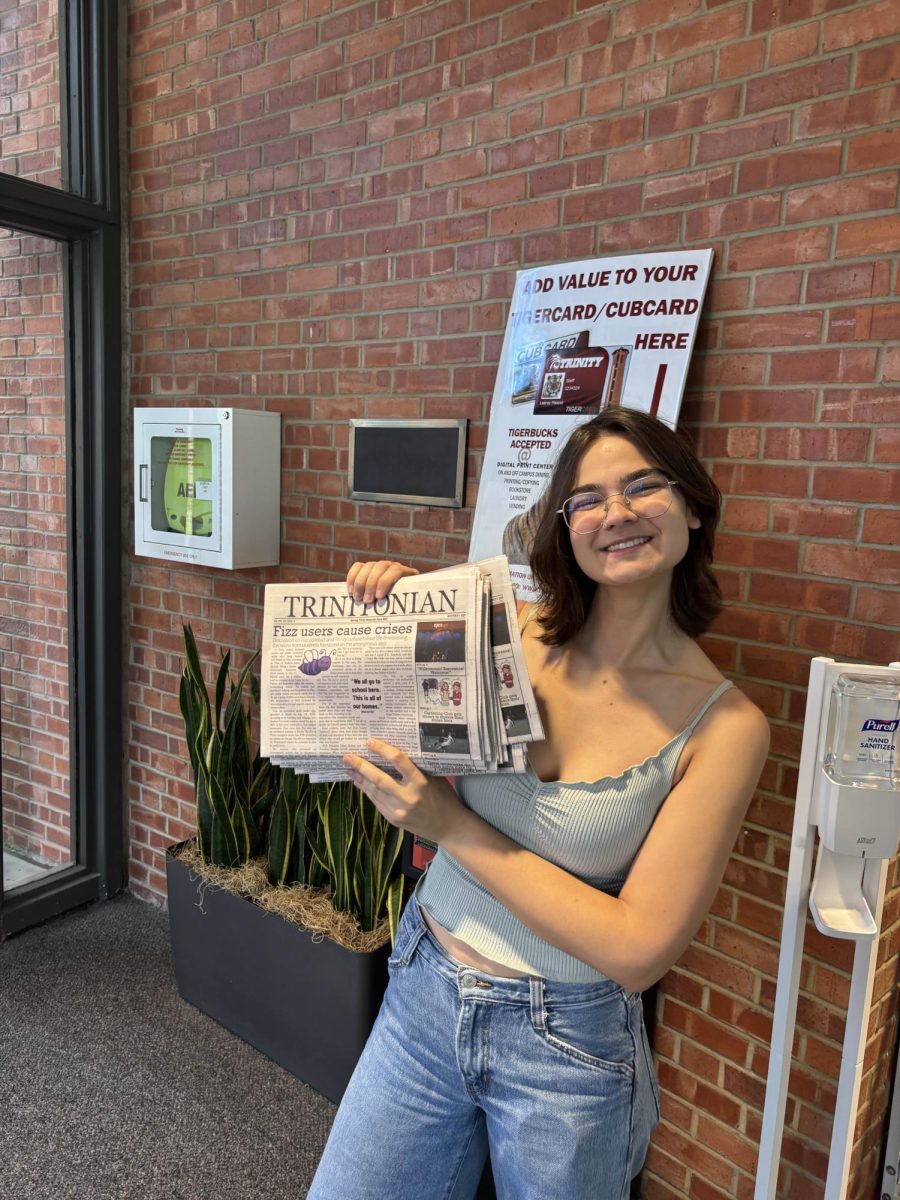
Mira Cohan, first-year psychology major, is a member of Trinity Hillel and celebrates Hanukkah each year. Cohan said that Hanukkah is a time of gathering in which her family lights candles, shares traditional foods, gives blessings and exchanges presents.
During this time, Cohan engages in charity work such as donating to food banks, summer camps and animal shelters. Cohan shared that her philanthropic acts signify humility when reflecting on her own experience with Hanukkah and giving back to the local community.
“It really taught me that there is privilege to being able to get these gifts each night. To have the privilege to not only receive gifts for ourselves but also give to other people has always been important to me,” Cohan said.
With winter break fast approaching, fall leaves cover the campus with cooler temperatures. Through a shift from class schedules to an interim time off, Trinity students prepare for a return to community and cultural expression within Christmas, Chinese New Year, Hanukkah and other winter holidays as the fall semester comes to a close.