The Aug. 25 Executive Order, “Prosecuting the Burning of the American Flag,” is more than just a tool for rhetoric. It’s another opportunity for the Trump administration to try to redefine state capacities, but also a chance to look back at the constitutionality of the right to burn the flag. To me, this executive order isn’t about burning the flag, but instead an attempt to alter First Amendment protections for immigrants while redefining constitutionally protected speech.
I spoke to John Hermann, associate professor of political science, to uncover more about this executive order. We spoke about the context surrounding it, what President Trump’s actual intentions are and the future of the Supreme Court of the United States (SCOTUS) under his administration.
Hermann teaches civil rights and civil liberties as well as constitutional law. He talked about 1989 Texas v. Johnson, which has acted as the legal basis for constitutional protections for flag burning.
“Gregory Lee Johnson walks down the street with his friends, and he says, ‘Red, white and blue, I spit on you.’ They went to the Republican National Headquarters and burned the flag in effigy,” Hermann said. “Now, 48 states at that time had laws against flag burning, and the United States of America. The Supreme Court held that flag burning is a constitutional right, and that burning the flag — which is really important — that the action, the symbolism, is akin to free speech.”
SCOTUS reaffirmed Texas v. Johnson a year later in 1990 United States v. Eichman after Congress quickly passed the bipartisan Flag Protection Act. The latter case had the same conclusion as the first — that the First Amendment protects burning the flag without intent to cause violence. However, both cases had slim 5-4 decisions, reflecting the divisiveness of protecting the right to burn the flag. Now, President Trump seeks to redefine constitutional protections by targeting immigrants directly.
The executive order is just one part of Trump’s attempt to redefine the First Amendment. The heart of the order states that the reason “groups of foreign nationals” burn the flag is “to intimidate and threaten violence against Americans,” calling on the Attorney General and Department of Homeland Security to prosecute those immigrants. Going beyond rhetoric, it associates the right to burn the flag — an unpopular constitutional right — with anti-immigrant sentiment to justify deportations. Like other executive orders, this order is short and vague by design.
Hermann suggests that this focus violates the 14th Amendment’s Equal Protection Clause, but that the courts may see it differently.
“It’s a wedge issue for autocracy,” Hermann said. “I would argue that most of what Trump does is under pretext. It has a hidden motive behind it. He says that, ‘Flag burning is terrible, and you need to make America great again.’ And he’s really saying, ‘Immigrants are the ones that burn the flag, therefore, we have to prohibit it.’ ‘We need to get them out of the country now. They pose a danger.’”
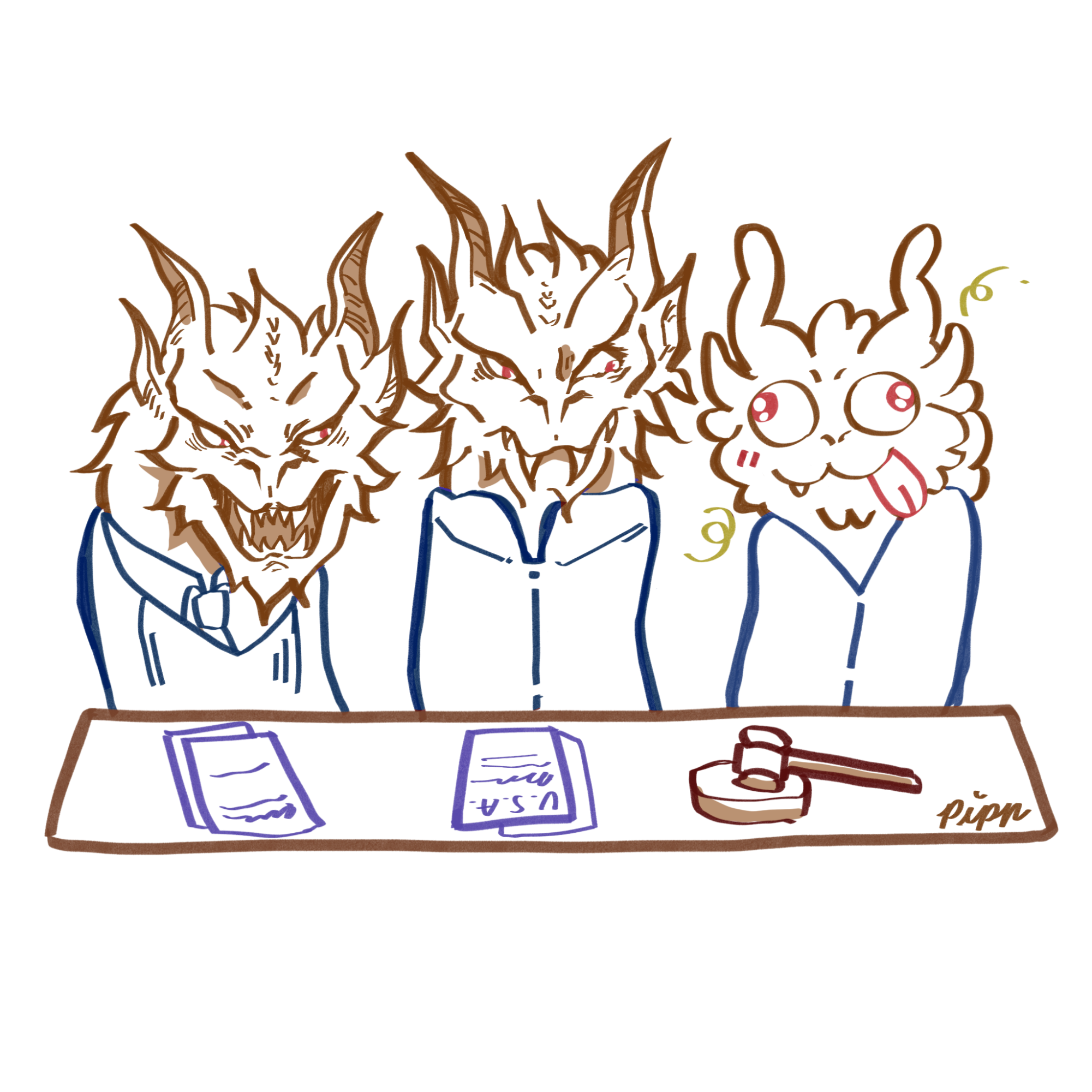
The current conservative supermajority makes it possible that the right to burn the flag could be overturned. The current Supreme Court guarantees a 5-4 or 6-3 decision on most ideologically divisive cases. Hermann discussed functions of modern SCOTUS decisions through the shadow docket, where SCOTUS can give a page or less with no reasoning and without oral arguments.
“What makes the Court different than the other branches of government is the detail that they outline their decisions in. They give a decision and they give the logic, and they give you about ten reasons why they decide something. They are no longer doing that. And with the executive orders, it makes it less transparent to the American public.”
The flag-burning debate isn’t new, and Trump has a mandate for it. In a YouGov poll from 2020, 77% of Republicans, 50% of Independents and 35% of Democrats responded that it should be illegal to burn the American flag — a majority of Americans.
But popular opinion is not always right, and it runs into 35 years of federal statute. On the other hand, it’s a lofty expectation that SCOTUS will reverse prior First Amendment statute. It’s a non-issue on paper, but anything’s possible when the SCOTUS weighs in on Trump’s deportation policies. What’s most clear is that Trump’s using flag burning as a wedge issue for the executive to use Immigration and Customs Enforcement as its personal paramilitary to crack down on immigrants. That truly seems to be the end goal for shifting these interpretations of legal statutes.
We can dismiss the onslaught of rhetoric that doesn’t hold weight constitutionally, but the reality is that these are targeted threats. In just under a month, the next Supreme Court session starts on Oct. 6, while the Trump administration ramps up efforts to deport immigrants. If this becomes another domino to fall, it will still be “morning again in America” for the white-picket-fence neighborhoods. But for nearly 14 million people, it will not.