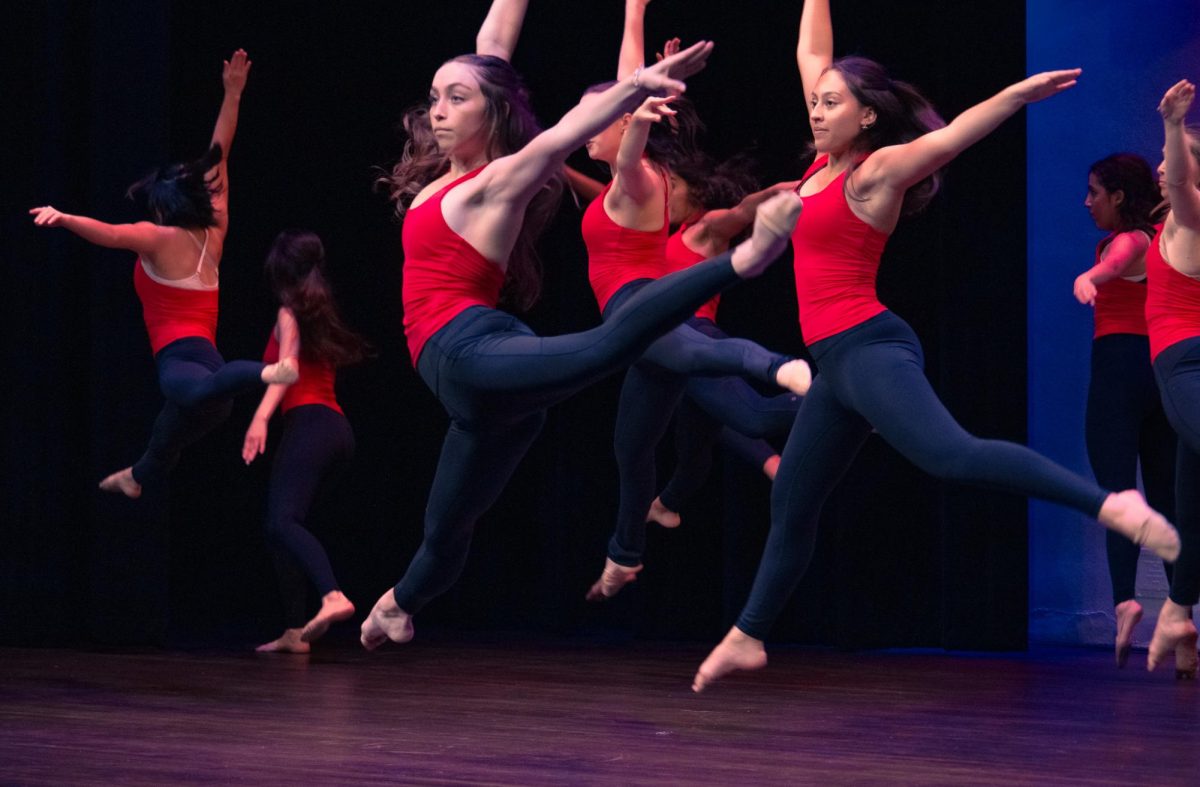
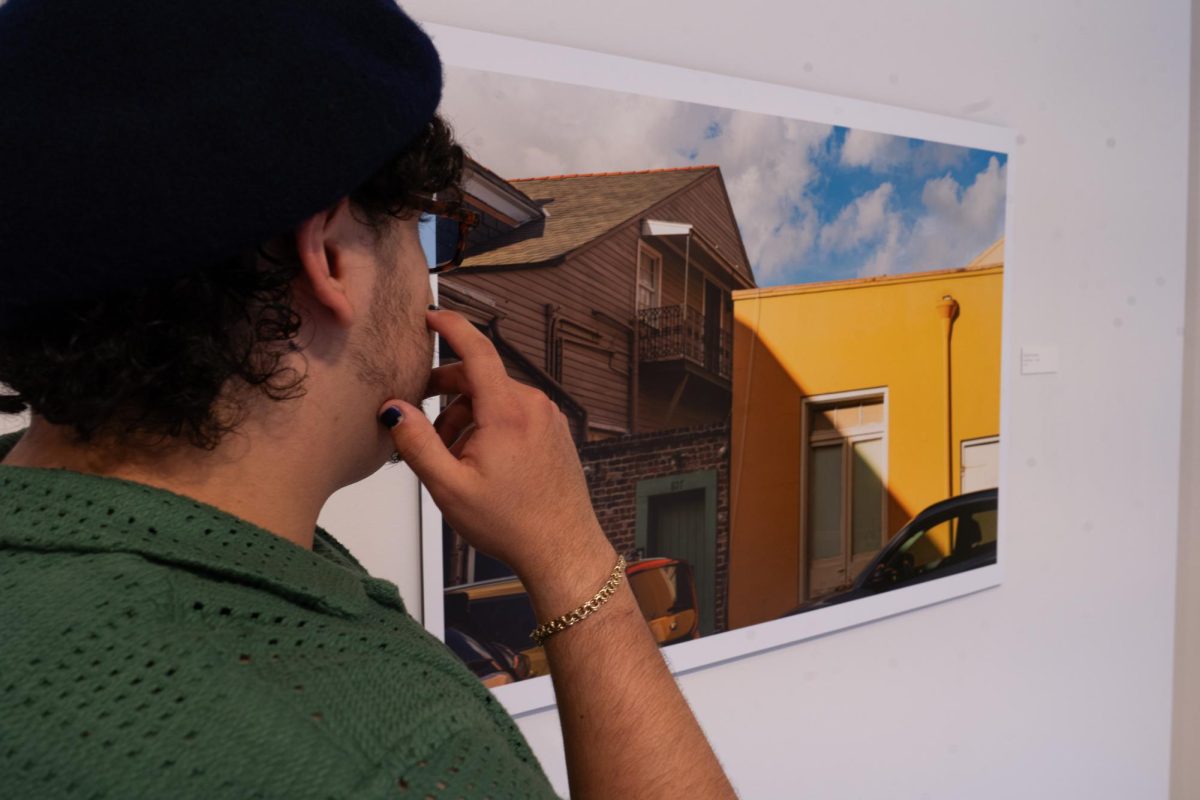
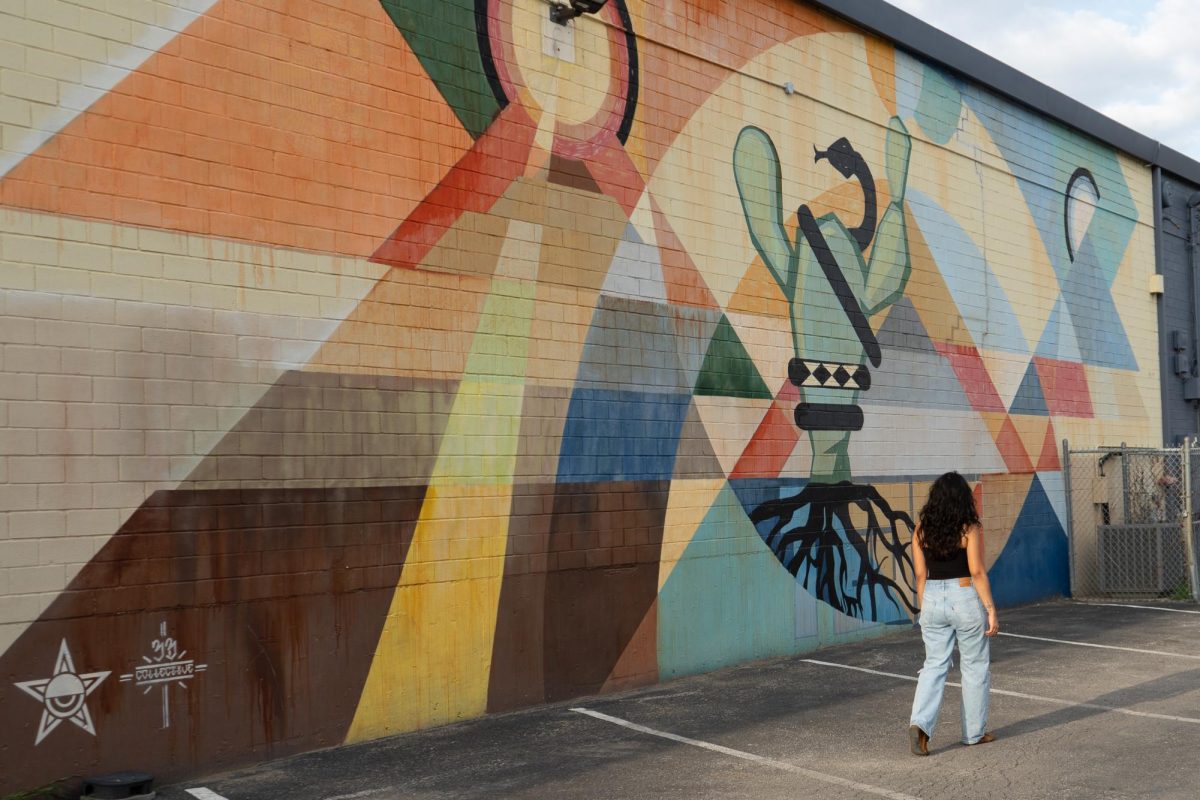
Over a hundred people gathered for this year’s Raza Cósmica festival to view a selection of sci-fi films from across North America. The lineup explored “alienhood” as both a metaphor and lived reality in Latine, Indigenous and Afro-futurist storytelling. The three-day festival, hosted by MonteVideo, ran from Oct. 9 to Oct. 11 at the Central Library and the Arthouse at Blue Star.
Manuel Solis, an independent film programmer, launched the MonteVideo initiative in 2020 to make Latine cinema accessible to San Antonio audiences. Raza Cósmica was born soon after, in 2021, and Solis has since organized five festivals free to the community.
“We settled on science fiction because that’s a genre that Latinos are usually familiar with. Growing up, a lot of households had ‘Star Trek,’ ‘Star Wars,’” Solis said. “As the festival grew, we found that it was a way for filmmakers to reimagine new worlds, where Latino stories are centered.”
Joaquin “Muerte” Abrego, local musician and activist, closed the festival with a live episode of “Xicanx Versus Aliens,” his paranormal podcast. Abrego co-hosted the episode with Amalia Ortiz, Tejana writer and artist, and Rodrigo Rendon, editor of “Occulto!” a folkloric mock-tabloid.
The programming reflected a wide spectrum of cinematic traditions, from Indigenous futurism to Afro-Latine sci-fi. Abrego pointed to the DIY ethos as the driving force behind the ingenuity of many featured works.
“It’s all independent. It’s all people experimenting with things like making laser guns or making people float,” Abrego said. “I feel like, as Latinos, as Chicanos, as communities of color, people don’t take our artistic concepts seriously. They don’t see a future with it.”
Although Abrego described a lack of support for Latine projects, Ortiz secured a grant in 2019 to adapt her master’s thesis, “Canción Cannibal Cabaret,” into a three-part video directed by Pepe García Gilling. Blending prose poetry with speculative fiction, Ortiz said she imagined a post-literate world where refugee “La Madre Valiente” starts a revolutionary movement through Chicana punk rock.
“[La Madre] sends punk bands, almost like town friars, out through the wasteland to recruit people into the Mujerista resistance,” Ortiz said. “They tell her story, they sing her songs, and it ends with ‘La Madre Valiente wants you!’ It is a cry to anyone who hears the punk rock musical that we need you to join our revolution.”
Through her band, Las Hijas de la Madre, Ortiz said that she animates her theory into praxis to inspire real-life revolution. At last Saturday’s Black and Brown Punk Fest, Ortiz said that Las Hijas joined other Texas bands to amplify their radical methodology.
“That is the purpose of [the musical], to show what spoken word can do on a different level than the page, to immediately electrify people,” Ortiz said.
While her film lacks traditional science fiction tropes — no lasers or little green men — Ortiz said that she sees her Chicane-futurist work as a meditation on alienhood, as the term now encompasses Latine immigrants in America.
“The metaphor of the immigrant as alien — I’ve seen so many people play with that,” Ortiz said. “Looking at what migrant futurism is, I see that in ‘Canción Cannibal Cabaret.’ When you think about it, will there always be a labor class that’s exploited for the elite?”
Pam Martinez, Venezuelan filmmaker, took the concept of extraterrestriality literally in her work “Illegal Alien.” The work is a part of Martinez’s undergraduate sociology thesis, based on interviews with Venezuelan women who migrated to the US.
“I wanted to honor the fact that there is a multiplicity of stories. It’s not about the story of one woman, this is systemic,” Martinez said. “Right now, there are almost 8 million Venezuelans abroad, and out of them, 80% are refugees.”
In her film, three aliens trapped in the desert are connected by their ability to hear stories of these migrant women, conveyed through abandoned objects they encounter on their journey.
“I wanted to play with the idea of being an alien. I was not interested in necessarily making it realistic because the reality is that being an alien is a construct,” Martinez said. “I was interested in the idea that they see us as strange creatures, but actually, we’re just as human as anybody else.”