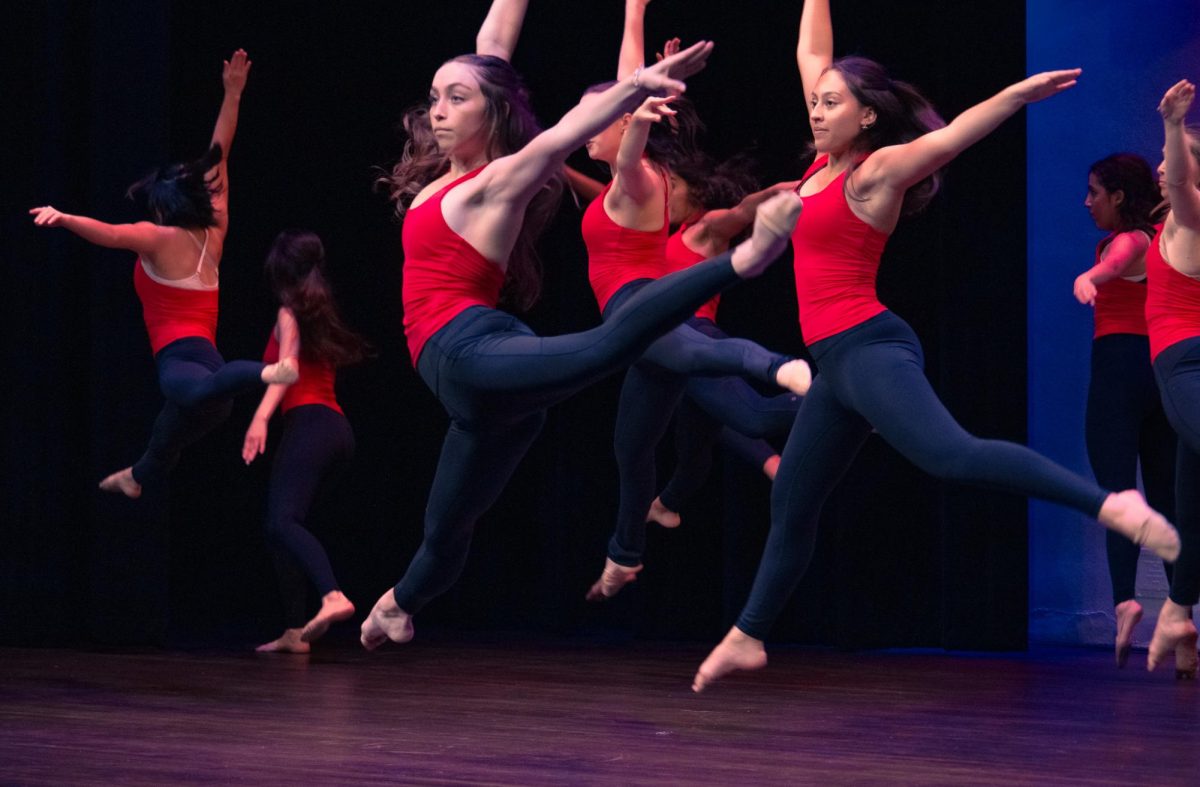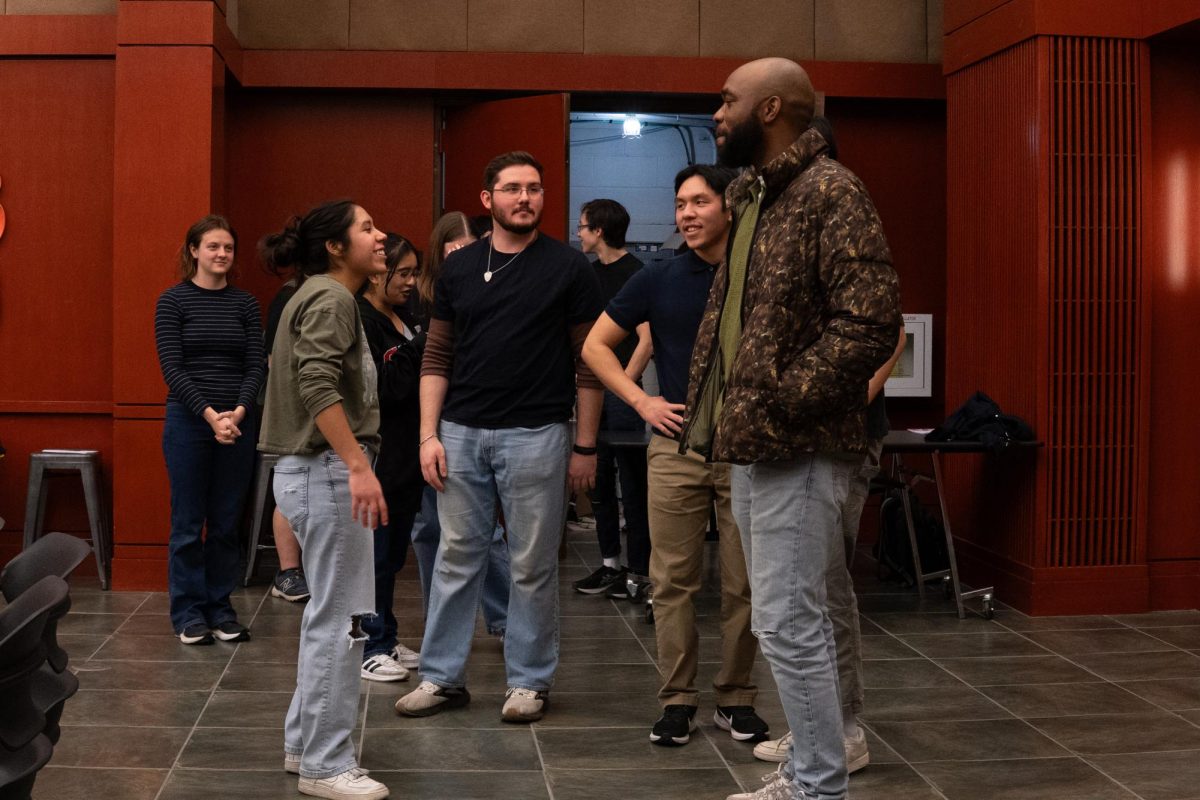
On Feb. 1 at 7 p.m, a group of 15 Trinity students stepped into the center of the audience in the Fiesta Room — not with costumes, props or traditional scripts, but with a 2,000-year-old story. Students gathered to watch the opening performance of “The Mark Drama,” a free, live performance hosted by InterVarsity Christian Fellowship that stages the Gospel of Mark.
The fellowship staged the performance in the round, a theater format in which actors perform within or among the audience rather than on a raised stage. InterVarsity campus staff minister John Florey, who stages the production campus-to-campus, directed the play. Trinity students performed the scripture-based dialogue on the round staging, presenting a student-led interpretation of biblical text.
Though rooted in Christian scripture, the production was open to the entire campus community. Parents of Trinity students, as well as faculty, staff and other community members, attended the performance.
Unlike traditional theater, “The Mark Drama” relies on what Samantha Leung, junior psychology major, called “the Bible itself” for its foundation, following the gospels’ timeline closely while incorporating movement and limited dialogue to give scenes emotional shape. With no budget for props or set design, the performance depended almost entirely on the actors’ physicality and the audience’s imagination.
Leung portrayed James, one of Jesus’s 12 disciples. She said the goal of the production was not to tell audiences what to believe.
“We just want to show a clear overview and let people draw their own conclusions from what we have said,” Leung said.
Most of the cast had no prior acting experience, and prepared by reading and discussing the biblical text together before rehearsals.
“We were kind of terrified,” Leung said. “But the reason we said yes was because we knew it was going to be scary.”
Leung said participating in the production required vulnerability. She added that the cast members discussed concerns about audience backlash while performing their faith publicly, given that many cast members had no prior acting experience.
“If we say we want to live our Christian faith and we truly believe this is true, we want to say it unashamedly,” Leung said.
Florey, who has worked with InterVarsity Christian Fellowship for 15 years, said the production’s simplicity is part of its power. The production arrived in the U.S. from Australia in 2018 and has since expanded to universities, including some in South Dakota, Minnesota, Wisconsin, Ohio and now Texas.
The Gospel of Mark was meant to be heard, according to Florey, but the performance was not meant to dictate the audience’s belief.
“If someone is curious, we want to offer a safe place for questions,” Florey said. “People can make up their own mind about who Jesus is.”
For Leung, that openness mattered most. She said she hopes audiences unfamiliar with the Bible would leave with a clearer understanding of the story presented.
Florey believes the message of the Gospel of Mark remains relevant to the status quo.
“I think this world is full of a lot of brokenness,” Florey said. “And I think the good news of salvation that Jesus offers through his life, death and resurrection is good news — the best news anyone could ever receive.”
Florey plans to direct another production in Wausau, Wis, in two weeks, with eight to 20 additional productions scheduled before May.
*This article was updated Feb. 11, 2026.