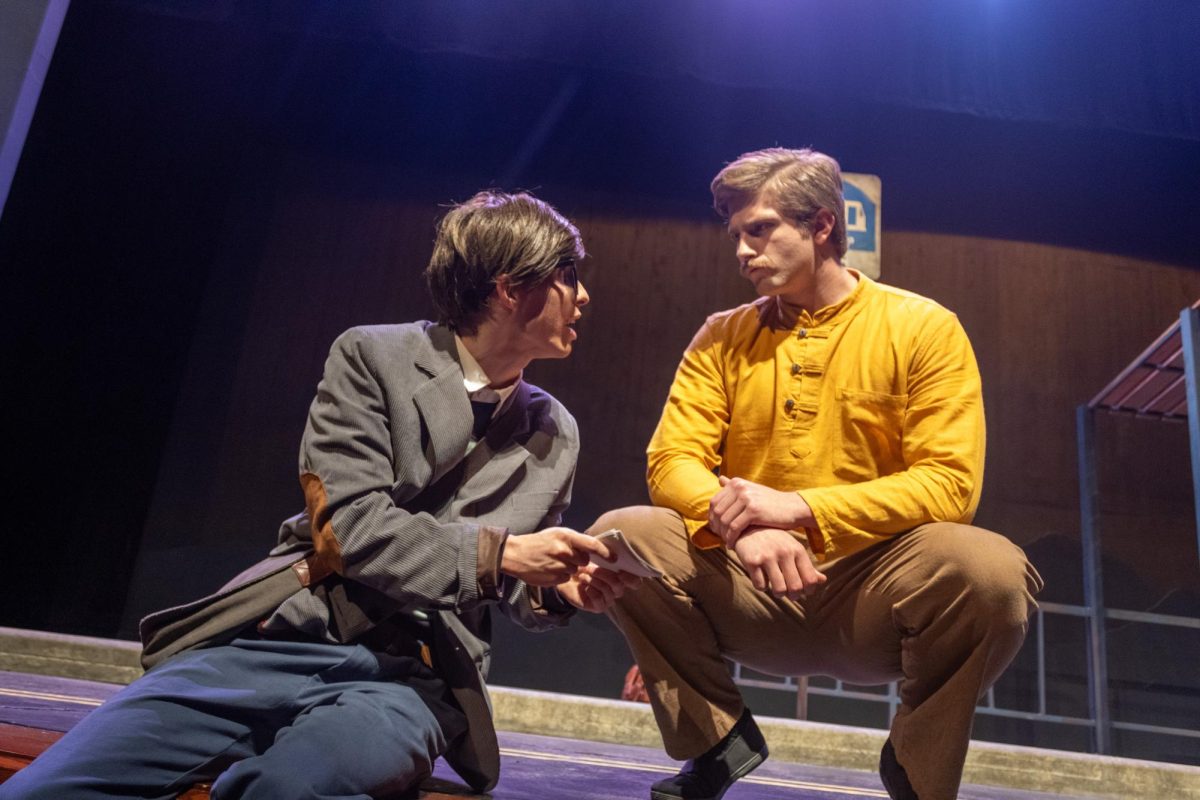
To kick off the first Trinity Theatre production of 2026, a cast of characters told the tale of anticipation. In the Stieren Theatre from Feb. 20–28, audiences gathered to watch “The Bus Stop,” a one act written by Nobel Prize recipient Gao Xingjian in 1983. Chloë Edmonson, assistant professor of theater, directed the play, while Trinity students performed.
During the show, a group of strangers wait in vain for a bus, leading to the expedited passage of time that forces personal dialogue, according to Edmonson. The absurdist play is riddled with stereotypical, overdramatic interpretations of characters like Spectacles, Carpenter and Old Man, which reveal more throughout the performance than their names may allude to.
“Humans only have so much time on this planet, and it would be a real shame to waste it hoping and dreaming,” Edmonson said. “I think that’s the main thing: to pursue those desires and follow those passions, and speak up when you see injustice.”
Arlo Castilan, junior neuroscience major and president of FTO, played “Hothead,” a role that projects the traditional “douchebag” stereotype onto the theatrical stage. Waiting for the bus represents the character’s learning curve, Castilan said, and he takes a life lesson with him after the play wraps.
“I will wait for these opportunities to just come right to me, but that’s not really how it works,” Castilan said. “This play has inspired me to take more action in my life and start to seek things out more instead of being a bystander.”
The similarities between the characters reveal themselves through the struggles of varied experiences, like womanhood and motherhood, stress from school and issues of old age. Edmonson discerns the central commentary as the wealth gap between urban and rural areas, she said. Only the bus, which never comes, can connect this gap, forcing each character to confront their own faults.
“The Bus Stop” was formally banned by Communist Party officials in China during the post-Maoist era. Thus, Edmonson and her team produced this play with a “transcultural lens” in mind. Dramaturg Hannah Tseuei, sophomore psychology major, translated the jokes in the play to help the cast and audiences understand them. For Edmonson, presenting non-Western shows that go beyond the typical conventions of theatre is important.
“We’ve been looking at the play from a transcultural context, meaning it’s written by a Chinese playwright,” Edmonson said. “But it’s inspired by experimental traditions of the European avant-garde.”
Xingjian’s play focuses on the symbolic significance of existential characters with their own paths and stories. Through its absurdist lens, it illustrates a dialogue between Western traditions, like Samuel Beckett’s ‘Waiting for Godot,’ while still implementing a political commentary about socialist China.