
A movie with Zendaya and Robert Pattinson? Sign me up. That’s all I had to hear to be seated for “The Drama” on opening day. What followed was a controversial film that had me questioning the crossroads of my morals and empathy. “The Drama” felt like a modern classic through the work of the incredible cast, imaginative visual sequences and thought-provoking commentary.
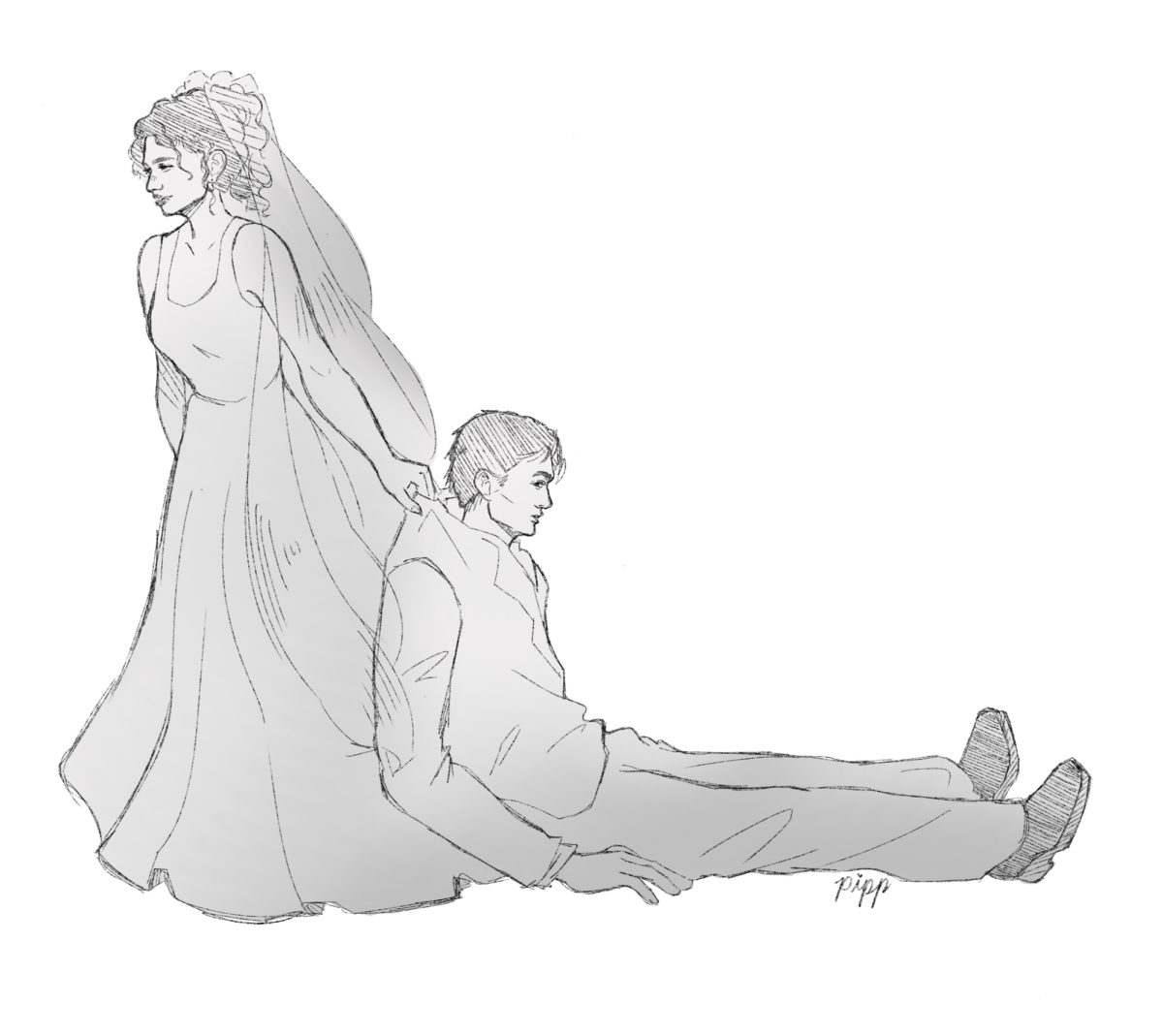
Emma (Zendaya) and Charlie (Pattinson) are set to be married in a week. Final preparations are in order, including a dinner with their maid of honor, Rachel (Alana Haim), and her husband Mike, the best man (Mamoudou Athie). After a few drinks, Rachel and Mike divulge that they shared the worst thing they’d ever done with each other before getting married. The four then take turns reliving their worst moments, until Emma’s confession creates a problem that Charlie spends the rest of the film grappling with.
Though I loved many facets of this movie, the lead cast — first and foremost — is incredible. Pattinson’s ability to convey Charlie’s slow regression into his worst instincts as he grapples with Emma’s unexpected confession is the heart of the film. Alana Haim is a standout in “The Drama.” Out of the characters who know of Emma’s past, Rachel, responds with the most aggression, and Haim was able to strike a middle ground between being understandable and completely hypocritical. Beyond that, the supporting cast with Hailey Benton Gates, Zoë Winters and Jordyn Curet were key to the film’s balance of drama and dark comedy.
Zendaya was, without a doubt, the top performer in this film. More than any of her other films, “The Drama” feels the most actualized. A lot of her details in the role are subtle, such as going through the realization that she is not like the people around her, but trying to fit in nonetheless. Emma is an incredibly complicated, divisive character. However, Zendaya’s performance brings an understanding and empathy that leaves audiences unsure where they stood before.
As the story unfolds, it alternates between the couple’s wedding plans and Emma’s past. We see the beginnings of their relationship as the couple rehashes the stories for wedding speeches and the memories that led to catastrophe at their wedding. Slowly, the pieces and details of who these characters are add up.
There are also several dream sequences that play out as Emma and Charlie try to imagine what the other is thinking, wondering if they really know who they’re marrying. One of the most poignant was Charlie imagining himself with young Emma (Curet), internally debating whether he can accept her past. The visuals and the editing do an amazing job, adding to the tension in the film. The audience learns alongside Charlie and experiences his descent through confusion, defense and acceptance, all captured by the film’s stellar cinematography.
What I loved most about “The Drama” was how many questions I left the theater with. Not because the movie was confusing, but due to the characters’ circumstances. Charlie questions how far his love for Emma can stretch. Although it’s clear Emma is different, the film asks if anyone can truly change. Beyond that, it questions who will be forgiven, if someone’s worst moment defines them. There aren’t any concrete answers in “The Drama,” but the film aims for empathy above all else.
For now, “The Drama” will stay relevant for its controversy, driven by the intrigue of the cast and complexity of the story. In the future, though, I imagine that this film will be considered one of the first to try and tackle issues unique to a generation that was raised online, constantly exposed to violence at a distance. Admittedly, “The Drama” is not for everyone. But it opens the door to conversion in a way that any good film should.