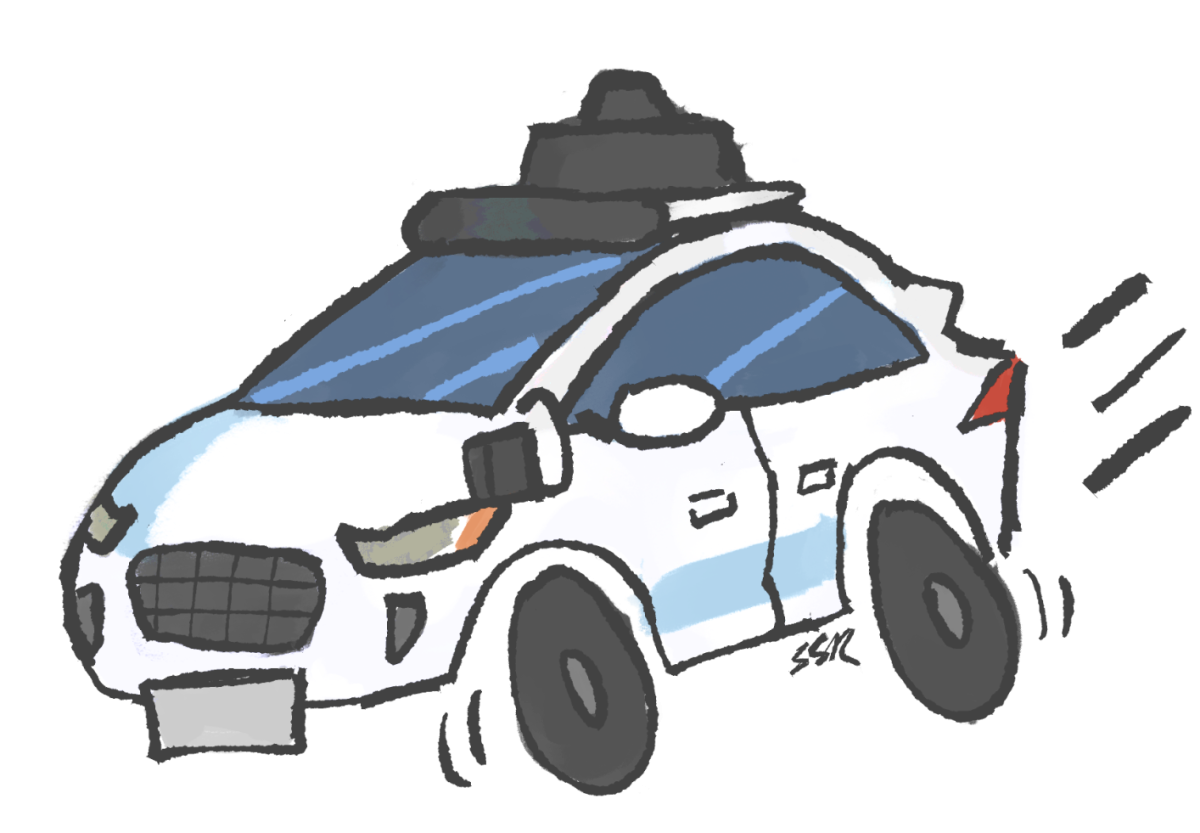
The first time I ever took a Waymo, I knew it was a necessary product in the twenty-first century. I had just left Koreatown Plaza in Los Angeles when I received a text from my best friend of six years: She no longer wanted to maintain a relationship of any kind. Things were over, and she blocked me. I had originally planned to depart by metro, but I needed to be alone and to feel alone with myself. At least for a moment.
In the 40 minutes it took to return to my accommodations, it was Waymo that gave me the space to grieve. I sobbed without anxiety that someone might see me, and I collapsed my head into my hands in the way that one does when nobody else is around. Since this experience, I use Waymo when I need to, and whether you use it to grieve alone or avoid potentially unsafe rides, I encourage readers to try the service for themselves.
Waymo arrived in San Antonio some months later, and my peers in the Trinity community seemed unsure how to feel about them. Among their concerns was their potential impact on the working class and the degree to which they could even be considered safe. Many people I’ve spoken to have either dismissed it as a novelty or believe it holds an almost evil quality to it. But I think that Trinity should embrace it.
Before my experience in Los Angeles, I wasn’t thrilled by Waymo’s service. It competes with services like Uber and Lyft, which provide work for anyone looking to make some extra money or make ends meet. And it’s owned wholly by Google, which, among other things, means from the first second I unlocked the car door in Koreatown to the moment I exited in West Hollywood, data was being mined for profit, and I was being surveilled. But that did not make it dead on arrival for me in any sense.
The night that I lost my best friend, I was vulnerable. I wanted to collapse on the sidewalk of Koreatown in agony. And if I were able to pull myself up, I thought, I surely would make it to the metro. But whether or not I would emerge downtown, or instead just gaze into the bright lights of the underground tunnels in a morbid and self-injurious curiosity was to be determined. If I couldn’t get my best friend back, the next priority was finding a truly safe space.
When Waymo arrived, I unlocked the door, turned on my heavy, industrial synth-punk playlist and fell into something analogous to a fugue state. I remember looking out of the window at the landscapes of suburban Los Angeles with the sense that I was both profoundly alone as well as profoundly guarded. This, I believe, is Waymo’s true appeal in a world in which individuals are burdened by a unique “surveillance consciousness” born of the digital age. Without a driver, there is nobody to perform for. The space asks nothing of you.
Beyond performance, Waymo is safer than other forms of transportation. It reports that its autonomous vehicles demonstrate significantly higher rates of safety than normal cars, with 92% fewer serious injury crashes. The likelihood of serious injury is far lower than you might assume. And you certainly won’t be assaulted or harassed. Last August, the New York Times reported that between 2017 and 2022, Uber recorded a sexual assault in their vehicles every eight minutes on average.
Grief had made me reckless with myself. I wasn’t thinking about where I was going, or who might be driving me there or what could happen along the way. I was thinking about her. What began as merely intuition during a bad moment in Los Angeles was proven right during the time that followed. I had been safer in a Waymo than I may have been in an Uber.
I wouldn’t like to live in a “Waymo-fied” future in which every interaction is autonomous. But whether in Los Angeles or San Antonio, Waymo serves a necessary function: It takes home the vulnerable and removes the risk inherent in getting in a stranger’s car to do so. Whether you’re plastered after a night out or grieving the painful loss of your best friend, it works.
Some readers may still prefer to be driven by a human being. I cannot fault them for that. But when you need to be alone — truly, safely alone — Waymo will take you where you need to go.