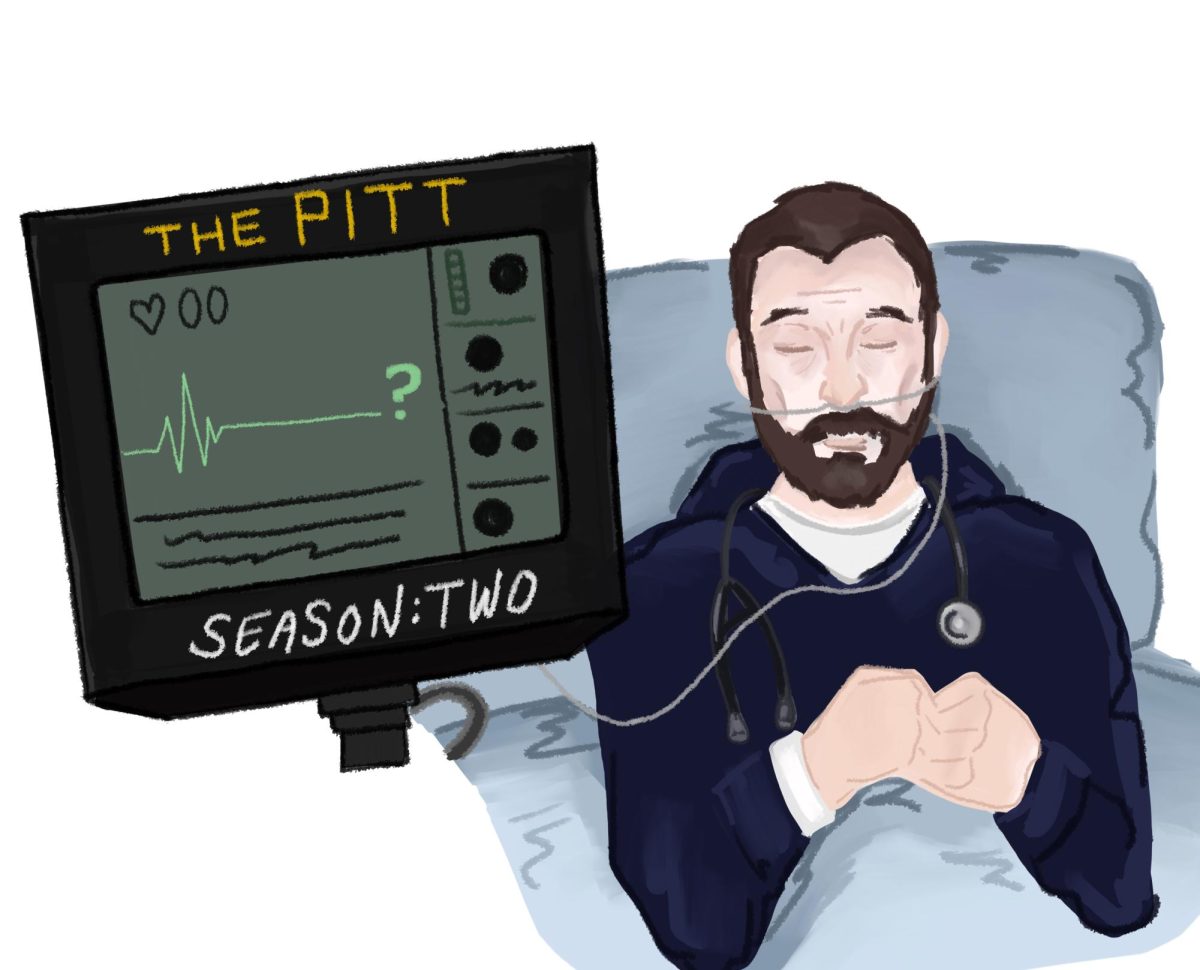

Unfortunately, there were times “The Pitt” might have been in critical condition during season two. While I loved the first season, the second didn’t have the same magic, buckling under its own high standards. Despite some intriguing changes and a fine finale, “The Pitt” deals with a sophomore slump as the show reduces the female characters’ storylines and struggles with pacing.
In its second season, “The Pitt” shows another realistic, 15-hour shift within the emergency department of a Pittsburgh hospital. Picking up 10 months after season one, the lead attending, Dr. Robby (Noah Wyle), goes through the motions of preparing the department for his impending motorcycle trip sabbatical. The attending taking over, Dr. Al-Hashimi (Sepideh Moafi), is introduced, Dr. Langdon (Patrick Ball) returns to work for the first time since rehab and many of the department’s younger doctors still have to figure out if emergency medicine is right for them.
Al-Hashimi is an amazing addition to the already robust cast. Moafi does an incredible job adapting to being dropped into such an established world. Throughout the season, the layers of her character are revealed, making her one of the most interesting throughlines across the episodes. Another highlight of the season was a focus on nurses’ issues, primarily through Dana’s (Katherine LaNasa) lessons to Emma (Laëtitia Hollard) on her first day as a nurse. LaNasa’s portrayal is gritty and a reminder of the intense, often forgotten work nurses do.
Although the finale did a good job at wrapping up any loose ends, there remain some structural issues the show will have to contend with going into its third season. Across the second season, there wasn’t a mass casualty event like there was in the first. Instead, this season focuses on an internal issue at the hospital that exacerbated the slow decline of Robby’s mental health. While this plot is interesting, it sidetracked much of the supporting cast’s roles.
With Robby’s motorcycle mentor, Duke (Jeff Kober), getting plenty of exposition to further the storyline following Robby’s mental health, it felt like many of the female characters didn’t have the time to flourish in the same way. Dr. McKay’s (Fiona Dourif) season two plot focused on her lacking love life, Dr. Santos (Isa Briones) had more screentime devoted to her doing paperwork over complicated dynamics she has with Dr. Langdon or the surgeon Dr. Garcia (Alexandra Metz), and Dr. Javadi’s (Shabana Azeez) parental issues were sidelined to discuss her TikTok fame.
Frustratingly, after over two seasons of Dr. Mohan figuring out if the emergency department is for her, it was announced that her actress, Supriya Ganesh, would not be returning in season three. The reason for departure technically aligns with the narrative, but it seems like an injustice to end Mohan’s story when her arc is so reflective of Robby’s. Although Wyle, as the star and writer of much of the show, has said he intends “The Pitt” to be a “revolving door,” it doesn’t seem so if the only characters who have exited the show so far are women of color, like last season’s Dr. Collins (Tracy Ifeachor).
While “The Pitt’s” realism is what makes the show stand out, it will never be completely accurate. It has to bend to the constraints of being a television show and shouldn’t use the realism it’s achieved as an excuse to deliver an unsatisfying narrative. With the focus primarily on Robby, the other plot points struggle to maintain relevance throughout the season. The other doctor or patient storylines were either given unnecessary screentime or felt like mere blips in the episode, no matter the actual weight of their story.
Despite my gripes with this season, the truth is that even with these pinch points, “The Pitt” is still some of the best television on air today. The show operates from such a different perspective than other medical dramas, capturing attention with its gritty, realistic look at issues in medicine; it is bound to make a second run at the Emmys. If “The Pitt” returns to the holistic approach to cast coverage that made season one so enjoyable, the third season can definitely make up for the second’s change in pace.