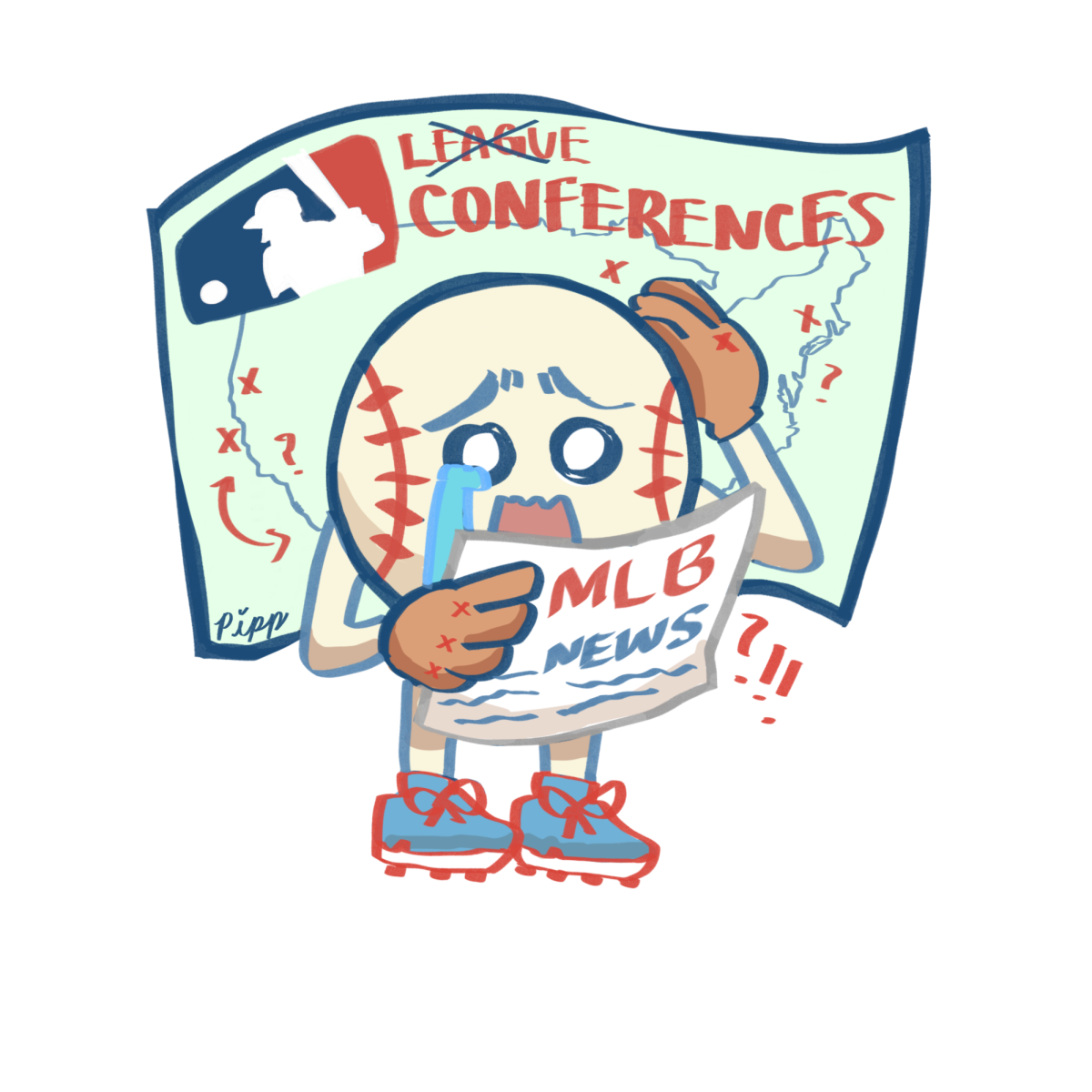
In August, Major League Baseball (MLB) commissioner Rob Manfred expressed interest in geographically realigning the league in the event of an expansion. This means MLB could move teams from their traditional leagues to create divisions with teams closer to each other. Manfred intended for this realignment to reduce the wear and tear players face when on the road by shortening travel times and distances. Fans could benefit, as their favorites teams would play more games in their regions and more games would start in the same time zone fans are in. However, that could entail jeopardizing long-standing traditions in baseball.
Fans and reporters have speculated what another realignment would look like. Unfortunately for some fanbases, it would be at the expense of long-standing rivalries. Baseball America’s Tracy Ringolsby provided one example of MLB restructuring around eight teams in four divisions. MLB currently has six divisions with five teams each, which I think is the sweet spot. If MLB opts for bigger divisions, it would give each league more of a “conference” feel similar to the NBA, taking away the charm of a typical division race. Division races have provided drama and made the postseason chase more thrilling.
Although this is only one speculative example of a realignment, it is certainly possible that we will see fewer in-season series of storied division rivalries like the Chicago Cubs against the St. Louis Cardinals or the New York Yankees against the Boston Red Sox. These marquee matchups could be endangered or lose their novelty because these teams would not meet as frequently as they would have with the current alignment.
The league could also reduce in-season interleague play, which would also take away potential World Series matchup previews. How would we know the hottest teams of the American League and National League fare against each other if they hardly play against each other until October?
Realignment would also warrant a retooling of the postseason structure as well. The 2022 Collective Bargain Agreement (CBA), an agreement between MLB and the player’s union, expanded the wild card round to 12 teams. The league could expand the Wild Card round even more when the current CBA expires on Dec. 1, 2026, especially if fewer division-winners are guaranteed a playoff berth.
If only four teams are guaranteed a spot in the postseason, the wild card race could expand further and reshape its first round. Wild card excitement could diminish and elicit a new play-in system in an attempt to continue appealing to baseball fans. If we are indeed allowing more teams an opportunity to clinch a postseason berth, MLB could head towards a play-in tournament format similar to the NBA.
Nonetheless, it is common for major sports leagues like the MLB to modernize and evolve their rulebook and playoff formats. The National Hockey League has been the most active with team expansion and realignment, bringing in two new teams within the last ten years. In 2017, the Vegas Golden Knights were founded, winning the Stanley Cup in 2023. The Utah Mammoth then followed, being the recent expansion team, founded in 2024.
MLB could also benefit from an expansion. The most recent MLB expansion was in 1998 when the Arizona Diamondbacks and Tampa Bay Rays joined the league, and every other major American sports league has expanded since then. Expanding to cities like Portland, OR or Nashville, TN would also help with geographic representation and bring in a new wave of fans. Portland already has an ongoing project in an attempt to house an MLB team with the realignment in mind. Nashville, on the other hand, has found success with their Triple-A affiliate team, the Nashville Sounds, with higher attendance records compared to other Triple-A teams.
Changes are not always a bad thing for America’s favorite pastime, but the MLB should tread lightly if they want to preserve the novelties that made fans fall in love with the game in the first place.