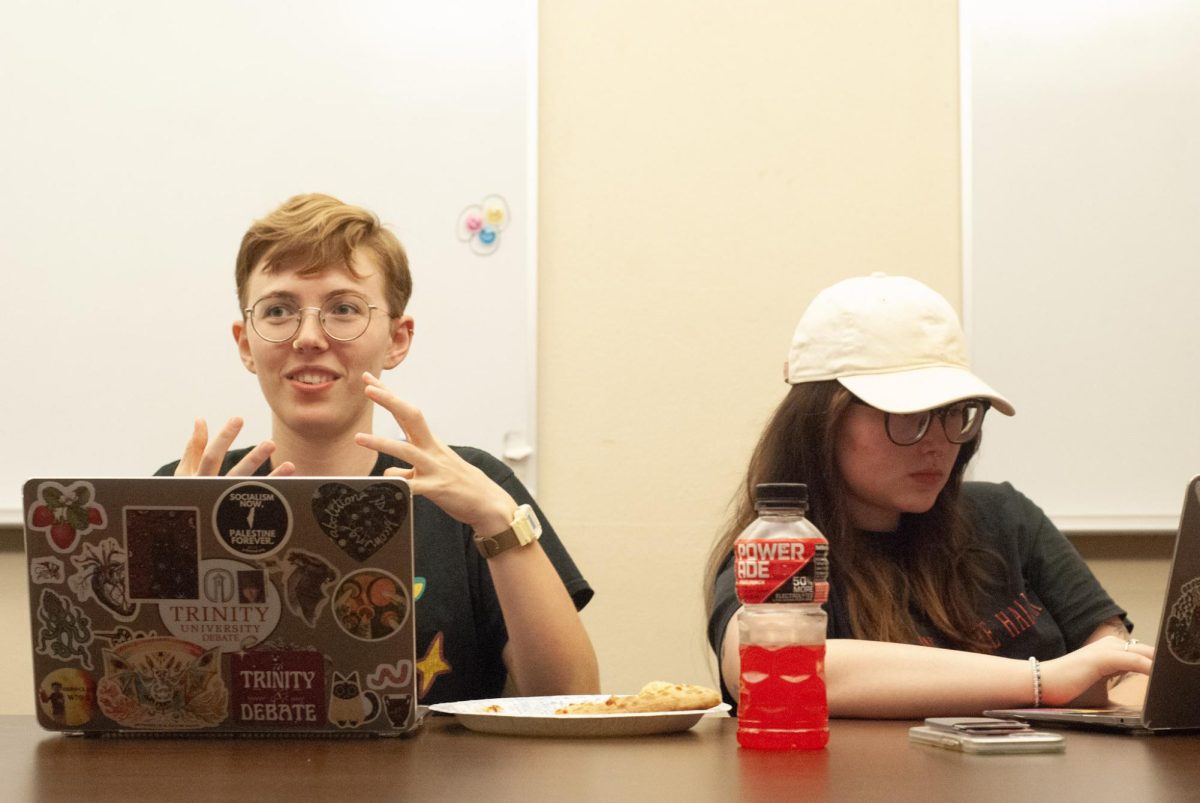
On April 20, Trinity’s public history class held a collaborative workshop on the 1921 San Antonio Flood in the Elizabeth Huth Coates Library. From 4-5 p.m, visitors weighed in on the exhibits, offering feedback to students navigating design challenges.
On Sept. 9, 1921, seven to 14 inches of rainfall poured down on the near west side and downtown areas of San Antonio. Reaching a death toll of around 51 civilians and $3.7 million in damage, the 1921 flood devastated the area. Trinity’s public history class tackled the flood’s history through a design charrette consisting of team presentations and interactive displays.
In the class, students utilized archive materials from the Coates Library Special Collections and Archives room to design the project. The cohort was split into five teams — each covering different aspects of the historic flooding.
On team “1921 Corps of Engineers Report,” students took charge of researching the physical document created after the flooding. Ana Olaechea, junior history and art history double-major, explained that this report is important as one of only a few sources of documentation regarding the flood.
The experience working with the report gave students the opportunity to research real artifacts. As a history and art history double-major, Olaechea said the project gave her important practice.
“This project is going to give me some hands-on experience, even if it is virtual, in designing an exhibit and interacting with primary sources and artifacts in order to communicate a theme and try to answer a question,” Olaechea said.
In a different part of the exhibit, team “Before the Flood” researched previous floods, current demographics and infrastructure before 1921. Esther Kim, junior art major and member of the team, said that she normally doesn’t like group projects. However, her experience working on the “Before the Flood” project was overwhelmingly positive.
“This has been the best group project I’ve been in ever thanks to the teamwork and support and kindness of each other,” Kim said.
Colleen Hoelscher, associate professor and special collections librarian, served as one of the main organizers of the exhibit. Over the years, Hoelscher has worked with students throughout the research process on a variety of projects, showing young researchers the flexibility in presenting information.
“Doing history is not necessarily just writing books and scholarly articles. The whole point of public history is making stuff very accessible for anyone,” Hoelscher said. “The output of this project is an online exhibit each year, and they get thousands of views on the library website.”
This project gave her an opportunity to learn and expand her own understanding of the content inside the special archives library, Hoelscher said. She encouraged students to join the class and get in depth with the special collections.
“It is a really great way to integrate skills learned in other classes while making a contribution to the library,” Hoelscher said.
Lauren Turek, associate professor of history, is the primary professor of the class. Every year, students in Turek’s public history class work with the Special Collections library and archive to design exhibits for various projects. This project puts students’ communication skills at the forefront, she said.
“One of things that I think is great about the project for students is they have control. They become the experts in the topic,” Turek said. “Really thinking and pushing yourself to do strong communication and interesting storytelling while also being accurate and true to the sources that we have.”
As a 20th century historian, Turek said that this annual project allowed her to learn from her students on topics she previously knew nothing about. Each time, it has grown her ability to teach in public history, provide exciting and accessible content, and shed awareness on parts of the special collections archives that often go unnoticed.