From cats to foxes to skunks, Trinity is home to a wide variety of animals, prompting conservation groups to care for them. While these animals are not directly part of campus life, students work to advocate for wildlife and ecosystem on school grounds.
Cat Alliance Trinity (CAT) is a student nonprofit organization founded in 2004, where students, faculty and neighbors volunteer their time to maintain the campus cats’ quality of life. Most of these cats are strays, except for “drop-offs,” cats relinquished by owners. According to their website, Trinity was the first university in San Antonio to follow the trap-neuter-release (TNR) program.
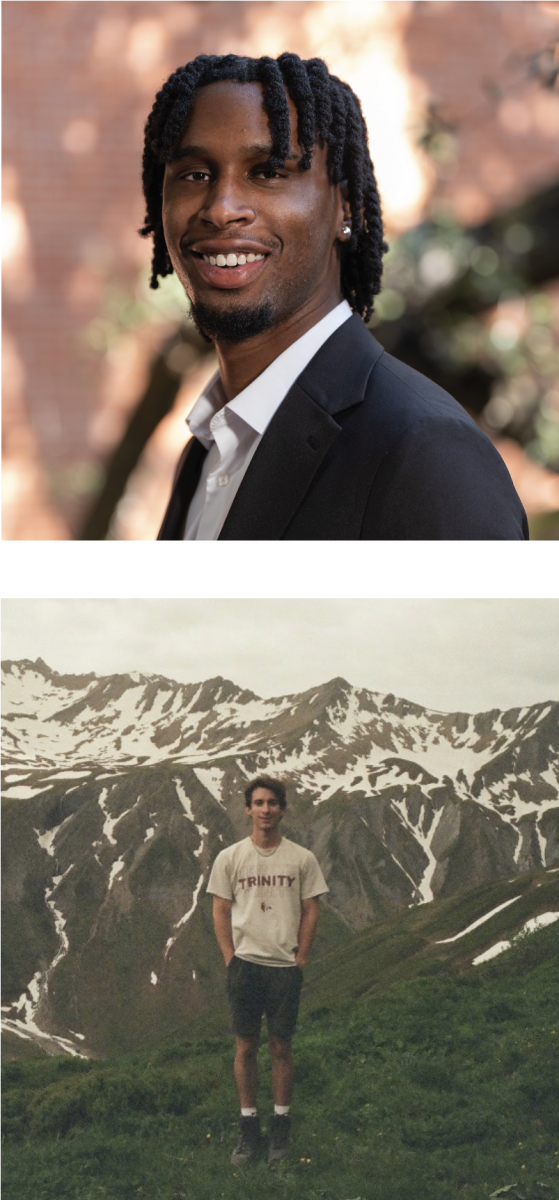
Jaden Martens, junior psychology and religion double-major, is the vice president of CAT. He said the group feeds the cats twice a day, provides shelter for them and manages the TNR program.
“We want to ensure that all cats on campus are healthy and can live their best lives because we believe that the cats are a very core aspect of this campus. A lot of people really enjoy the cats, and we go to these cats for comfort,” Martens said. “The conservation of these animals not only aids the ecosystem, but it also provides emotional and mental support for the students.”
Martens also said that cats help students and the environment with pests. According to him, the cats keep the bug population on campus in check.
“They like to hunt the bugs, which is nice because of how many cockroaches we have,” Martens said.
EcoAllies is an ecology student organization that focuses on maintaining the campus environment. Established in 2008, the organization started as Students Organized Sustainability. It focuses on keeping Trinity sustainable while advocating for divestment from fossil fuels. According to the organization’s constitution, the main overall goal of the organization is to “seek ecological justice and a livable planet for current and future generations, conservation and preservation of land and water, and the fair treatment of humans and nonhumans.”
Miranda Noren, senior geoscience major and current club adviser, said that the organization provides lectures and documentary screenings, teaching students the benefits of living more sustainably.
“We take care of the Mabee Dining Hall Garden, and we also do ‘campus clean-up,’ where we clean up litter,” Noren said.
In addition to the former president’s input, Tegan Harlow, junior sociology and English double-major and current president of EcoAllies, said having campus clean-ups is essential due to the danger that litter can pose for the animals at Trinity. According to Harlow, the litter includes plastics and batteries, making a dangerous environment for the critters.
The responsibility for the conservation of vegetation belongs to Trinity’s facilities department, which is in charge of watering and landscaping the grass and other vegetation. Greg Hazleton, program director and professor of environmental studies, is involved in the education of conservation of water and green spaces around the school. Hazleton also said that in efforts to move towards sustainability, most of the water used to irrigate vegetation is recycled.
“Without a lot of the work by our facilities people, this wouldn’t be green. We’d have the live oaks. They would be fine, and they would be green, but the grass and all that in a natural cycle would be brown and dry,” Hazleton said.
Groups like CAT and EcoAllies focus on spreading awareness and educating people about the importance of sustainability and caring for the animals around campus. For people like Noren, the conservation of that uniqueness is essential to our community and should continue to be cared for.