Trinity’s debate program has been around since 1908. Directors William Jensen and KC Vernon work with students on the team to continue competing and gaining national recognition. Trinity’s debate team training and competition remain centered on policy debate.
KC Vernon, lecturer for human communication and theatre and assistant director of debate, said the topic this year is whether the United States federal government should substantially increase collective bargaining rights for workers. During a round, two teams (each consisting of two people) compete against each other: one covering the affirmative side, the other covering the negative.
During a round, all four competitors speak. But according to Vernon, they speak at a pace that might sound like gibberish to someone who’s never seen a debate round. During a conversation, the average person says around two to three words per second, according to VirtualSpeech. However, Vernon said that in debate, a competitor says about six to seven words per second. She said this high speed and intensity is something people spend years training to be able to do. William Jensen, associate professor of human communication and theatre and director of debate, spoke about the distance between perception and reality in debate.
“Debate is interesting because the competitors do talk very rapidly, so it’s not what you would think of a public debate where everyone is slow and eloquent,” Jensen said.
Starting in 1977, Trinity was nationally ranked by the Cross Examination Debate Association as one of the top 25 schools for 10 consecutive years. Since then, under Director Sarah Topp, the program consistently ranked in the top 25 in the country. Rankings fluctuate throughout the year, but as of Oct. 26, Trinity’s debate team was ranked no. 24. This fall, the team was no. 13 in the nation.
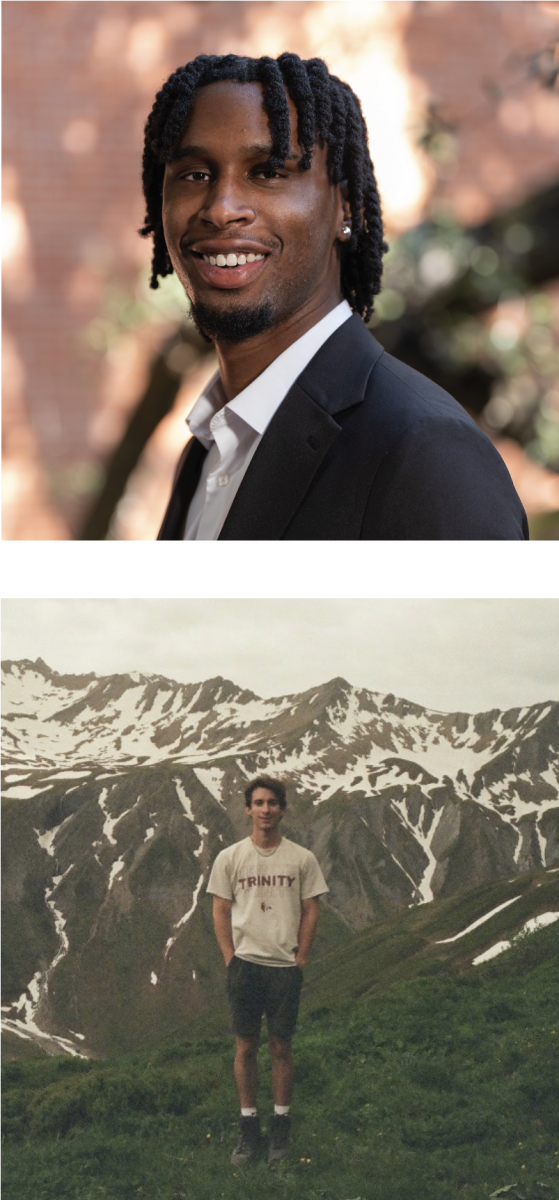
Despite being one of the top-ranking teams in the nation, Imaad Mustafa, sophomore economics major, acknowledged how little recognition the team gets. He said they currently don’t even have an Instagram account, but there is talk about starting one.
“We think that we as debaters are working our best, whether or not we are getting looked at, because we know that in the debate world, people know us, and we find that more important than people on campus,” Mustafa said.
Mariska Khalikov, sophomore international studies major, noted differences between Trinity athletics and Trinity’s debate team. Khalikov was part of a team in debate this year that were semifinalists in the junior varsity division at Northwestern University.
“It’s just not as accessible in the same way that sports might be, because in sports everyone understands Trinity football knocked the socks off that team 63–0. They can understand that. That means something,” Khalikov said. “A debate tournament requires a lot more understanding of what’s going on, and it might not be as publicized.”
Vernon also said the debate gives students the ability to stand up and make an argument — something she said nobody can ever take away. Jensen also said participation in debate is very rewarding.
“My experience with a lot of the debate skills that I acquired served me very well in graduate school — the ability to read and process information quickly, finding resources and doing research, writing papers,” Jenson said. “It’s invaluable as a tool for academics and people who want to go to law school.”
The benefits of debate extend beyond academics. Competitors Khalikov and Mustafa both said debate impacts the way they view politics and their capability to understand both sides of an argument.
Khalikov added that debate shaped the way she viewed politics, as well as benefited her writing skills. However, one thing that stuck out to her is the community Trinity debate fosters.
“My favorite aspect of debate, and this is gonna sound cliche, but it is definitely the friends that you meet in it, because you’re in it for so long that you just make the stupidest jokes that only debate people can understand,” Khalikov said.
But as Khalikov and Mustafa both said, debate is more than simply an activity. At its core, Trinity debate is about more than just their trophies and rankings.