This piece is entirely satirical. Read the rest of our April Fool’s edition, the Trinibonian, here.
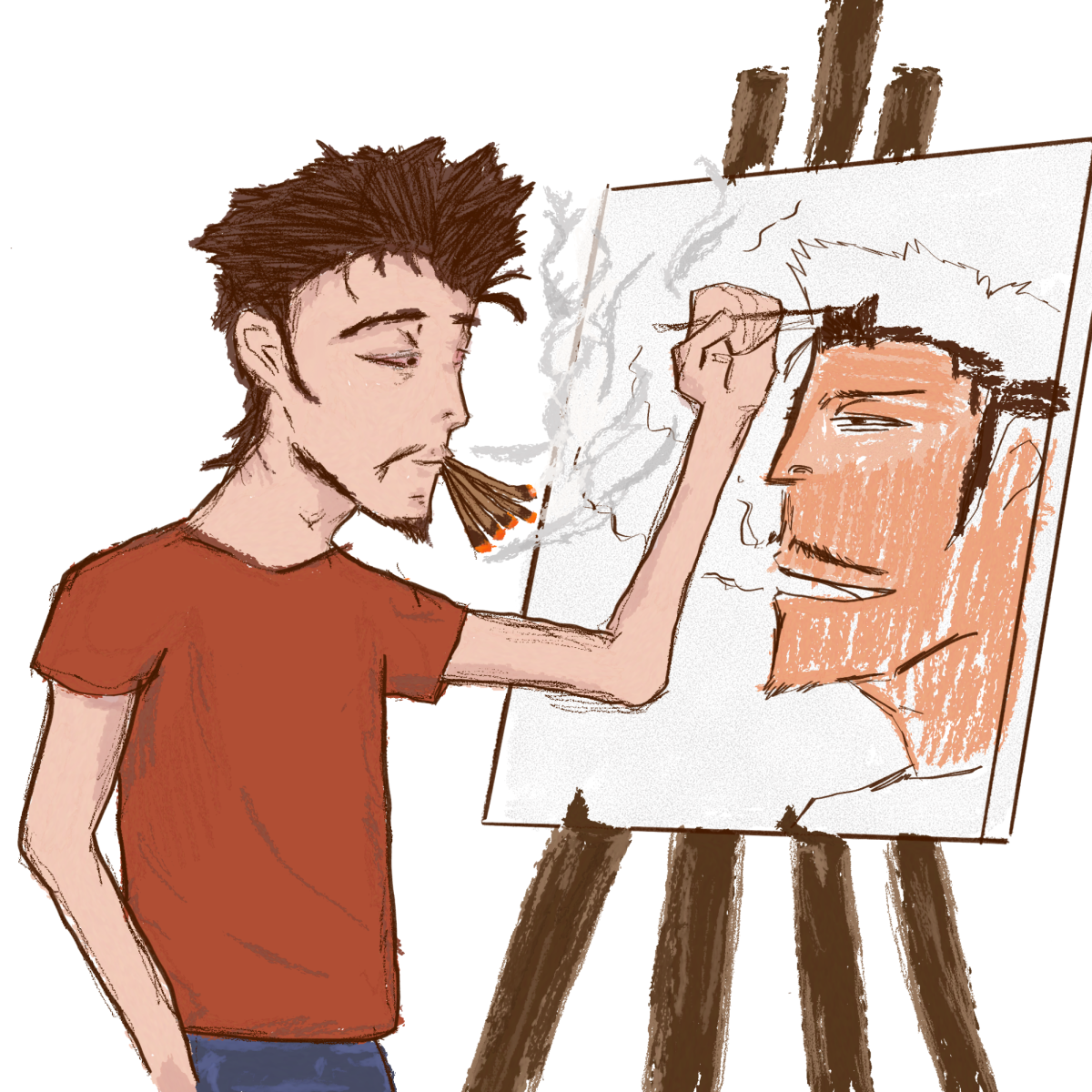
A new course, ART 4200: ‘Buds and Brushes,’ is launching this fall, Trinity’s art department announced. The upper-division studio elective incorporates cannabis use into the curriculum and has drawn immediate student interest with quiet administrative tension.
The course, set to meet Tuesdays and Thursdays in the Ruth Taylor Fine Arts Center’s Studio C, pairs acrylic and watercolor lectures with cannabis consumption sessions. Developed by the art department as an exploration of perception and creativity, the class filled within five minutes of registration opening. It has generated a 69-student waitlist, raising broader questions about how far a liberal arts curriculum can stretch within the legal constraints of Texas.
“We noticed that students were getting faded before class anyway. We’re just making it official. And graded,” Kush Blunt, chair of the art department, said.
The department developed the program in close consultation with university legal counsel; under Texas law, recreational cannabis use remains, in fact, entirely illegal. Professor Blunt declined to take follow-up questions regarding how the course would operate under those conditions.
Lily Ronka, junior chemistry major and art minor, understood the class as an interesting application of lab principles. Ronka works with hydroponics in chemistry, and she mentioned that Buds and Brushes is one of the few courses in which creativity comes to life in unexpected ways.
“The most honest course that Trinity has ever offered,” Ronka said. “The colors feel deeper, the ideas feel stronger and the artistic confidence is definitely there the whole time.”
Her response reflects a broader student reaction: less surprise at the concept and more appreciation for its transparency. For some, the course doesn’t represent a break from academic norms, but a recognition of what those norms have quietly accommodated until now.
Professors of the course encourage their students to lean into the process, wherever it takes them. Buds and Brushes places less emphasis on perfect technique and more on how the art feels in the moment, with results that may be interpreted differently over time.
According to the syllabus, required materials include brushes, canvases, a bong or pipe, and “whatever helps you see the colors more deeply.”
Final projects will be displayed at an end-of-the-year exhibition entitled “Perceived Masterpieces.” Whether those works reflect technical skill or altered perception remains entirely up to the viewer.